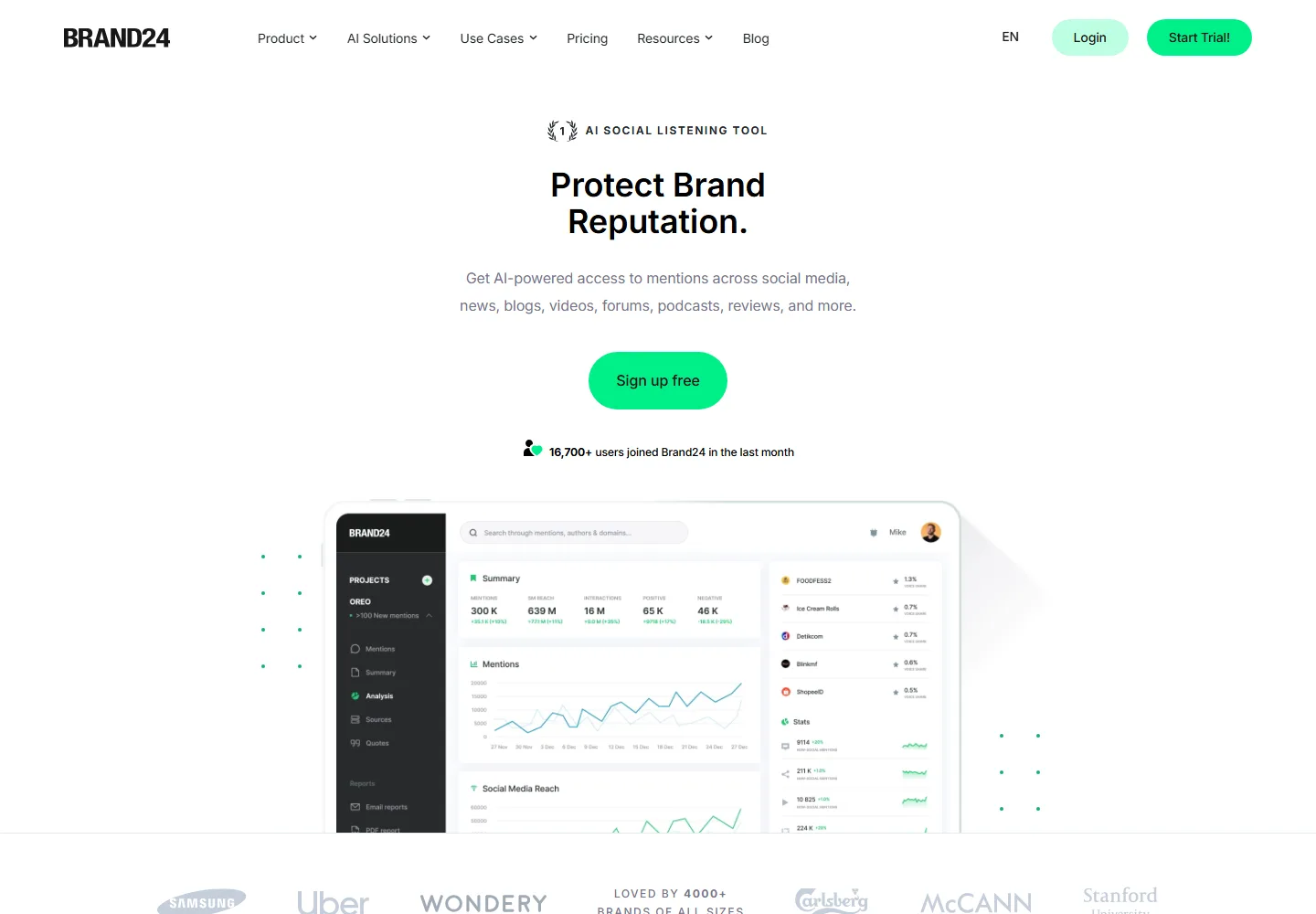
Brand24 does something unusual for this batch: it tells you what everything costs, and it prices on the two dimensions that actually determine whether a listening tool works for you.
The limits are the product
Keywords and mentions. Everything else is secondary.
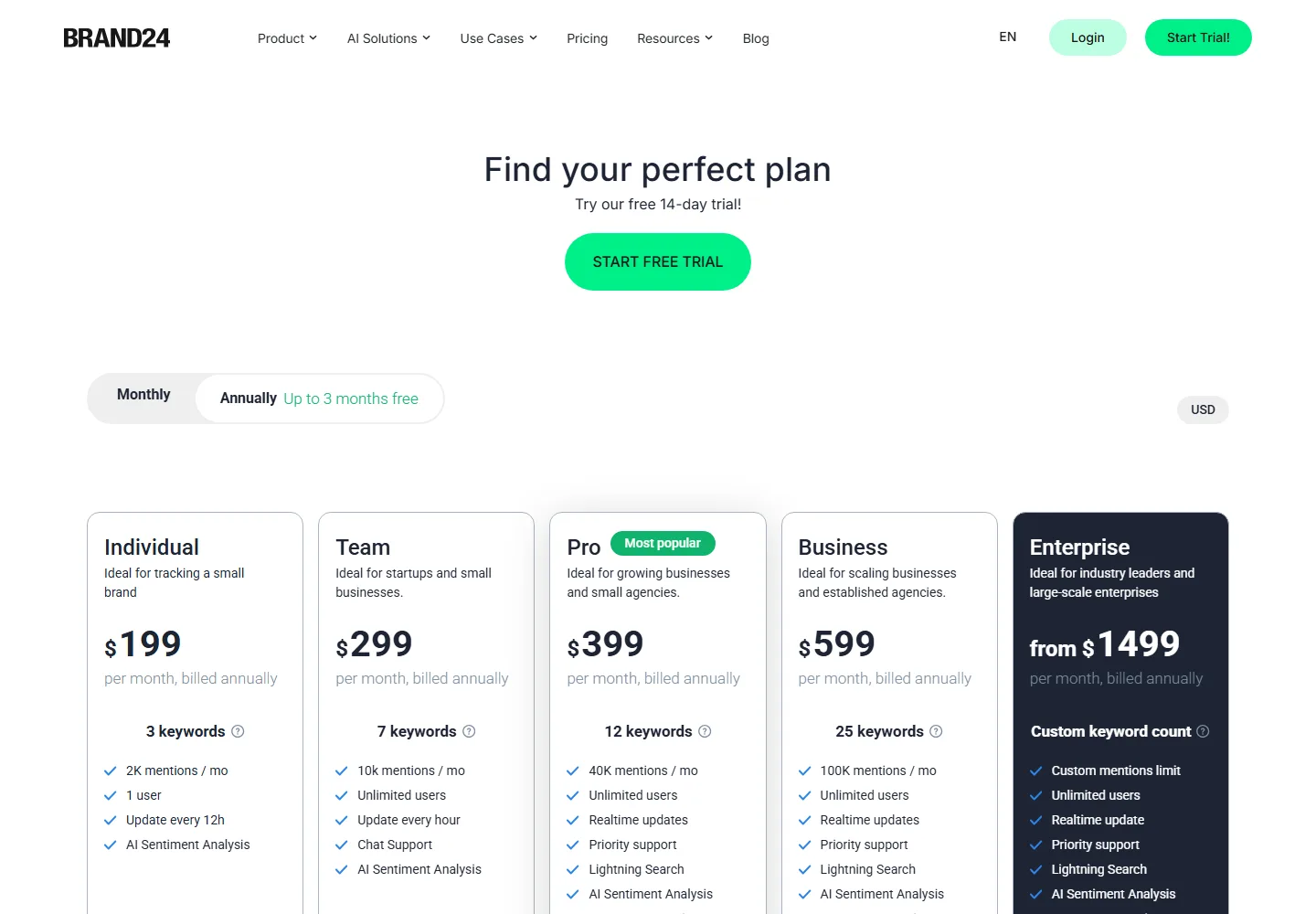
Keywords run 3, 7, 12 and 25 across the paid tiers. That sounds generous until you count what a real setup needs. Your brand name, the common misspelling, your main product, two competitors, your CEO, a campaign hashtag. That is seven before you have thought about markets or sub-brands, which puts most serious users at Team or above regardless of the price they hoped to pay.
Mentions run 2,000 to 100,000 a month. This limit behaves differently from most software caps because listening volume is not under your control. A normal month sits comfortably inside the allowance; the week something goes wrong does not. Ask what happens at the ceiling before you need to know.
Update frequency is the third tiered dimension, running from every 12 hours on Individual, to hourly on Team, to real time on Pro and above. That is an honest way to segment, and it also means the entry plan cannot support the use case most people imagine when they buy listening.
What the entry plan actually is
At 199 dollars a month, Individual gives one user, three keywords, 2,000 mentions and twice-daily updates.
That is a monitoring tool. It will tell you what was said about you yesterday, which is genuinely useful for tracking share of voice, measuring campaign response and spotting trends over weeks.
It is not a reputation tool. Twelve hours is the difference between joining a conversation while it is happening and reading about it afterwards. If crisis response featured in the business case, Team at 299 dollars with hourly updates and unlimited users is the real starting point, and the jump is small enough that most buyers should plan for it.
Unlimited users from Team upward deserves credit. Listening data is most useful when the PR lead, the social manager and the support lead can all see it, and per-seat pricing at this level would ration exactly the visibility you are paying for.
Source coverage is the quiet strength
Sixteen named source types, including Reddit, Quora, Twitch, podcasts, newsletters and review sites alongside the obvious social networks.
That breadth matters more than it appears. Brand conversations increasingly happen in places that are not social feeds, and a tool that only watches Instagram and X will report calm while a Reddit thread does real damage. Naming the sources rather than referring to social media generally is also more useful for a buyer than most competitors manage.
What is not published is retention and archive depth, which determines whether you can look backwards when someone asks how sentiment changed since last year. Worth establishing during the 14 day trial, which is long enough to see a genuine pattern rather than a snapshot.