
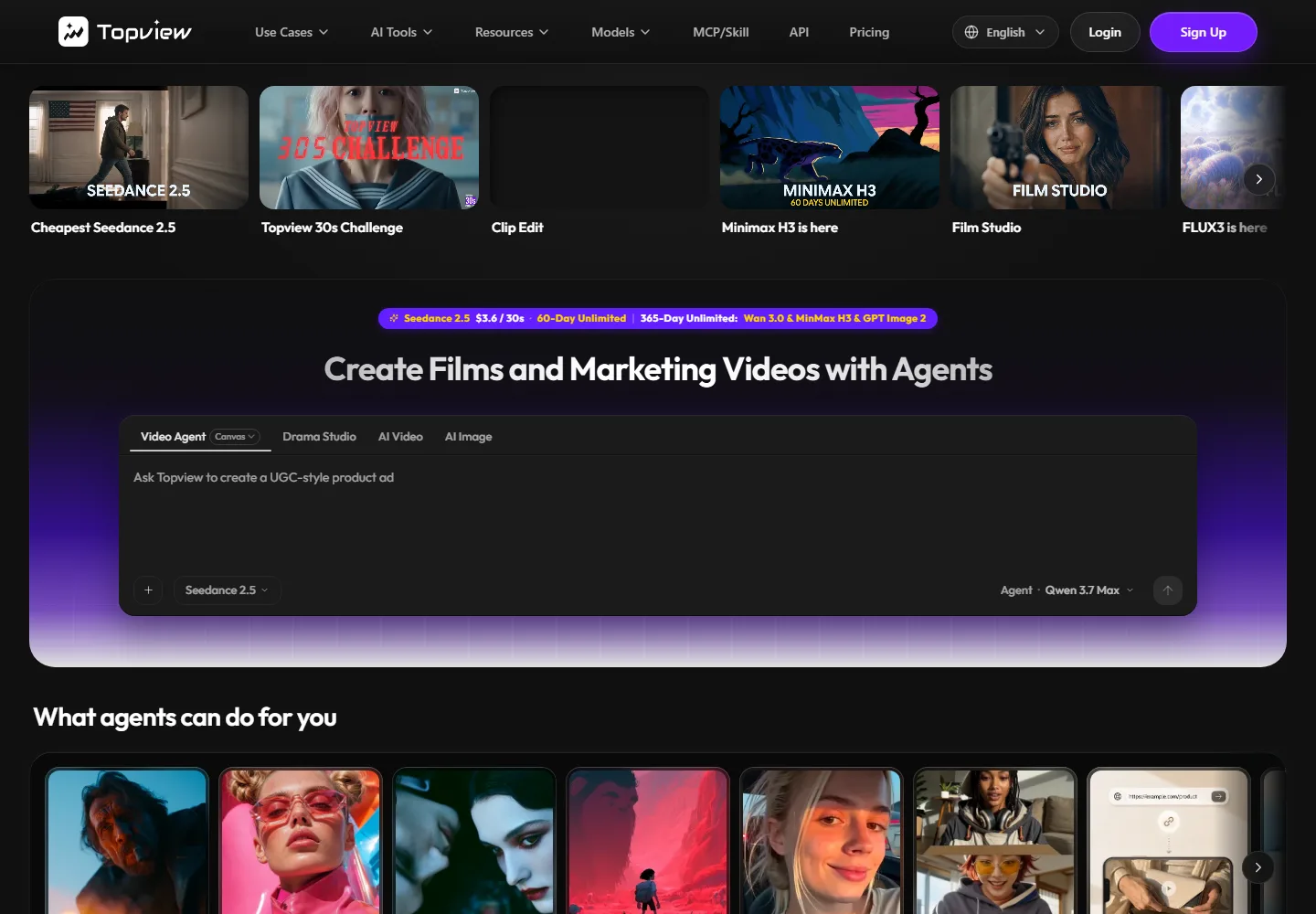
Topview AI generates marketing video from a description, a script, a reference video or a product URL, with an agent handling scene planning and model selection rather than asking the user to direct each step.
The URL path is the interesting one
Producing product video usually stalls at the brief. Someone has to gather the images, the specifications, the price, the positioning and the two benefits that matter, and only then can production start.
A product page already contains all of that, structured, written and approved. Pointing the tool at a URL skips the step that actually consumes the time, which is a smarter shortcut than making generation marginally faster.
The corollary is that output quality inherits page quality. A thin product page with three bullet points and a stock photo will produce a thin video, quickly. Teams whose product pages are strong will get considerably more from this than teams whose pages are placeholders.
Keeping outputs editable rather than delivering a flat render is the other sensible decision, because the first pass at a video is usually nearly right and fixing it should not mean regenerating from scratch.
Per-second pricing changes behaviour
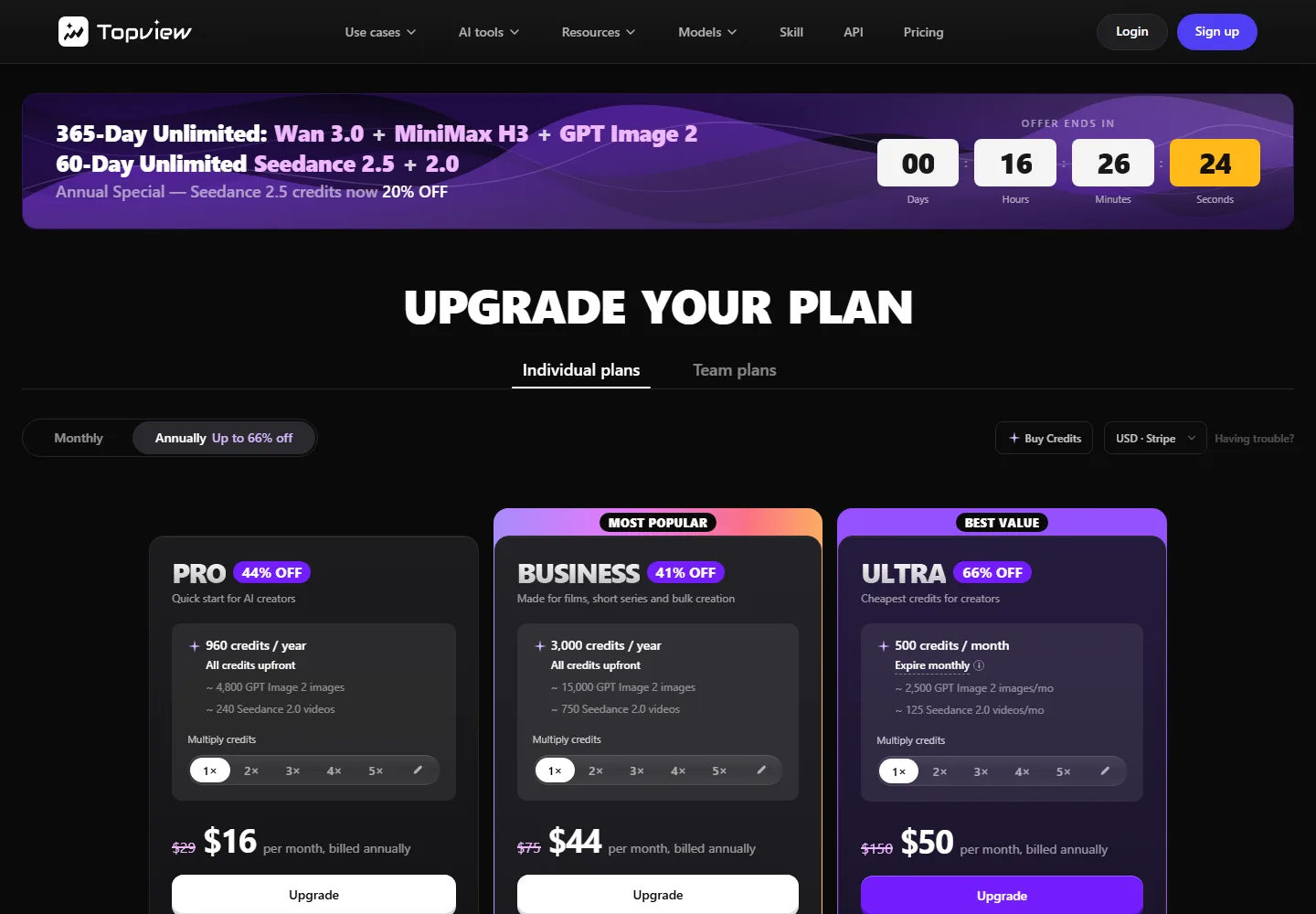
The advertised rate of 0.12 dollars per second at 720p is unusual in this category, where monthly credit allowances are the norm.
It is more honest, in that you pay for what you use rather than guessing at a bundle. It also has a behavioural effect worth planning around. Short-form video testing works by producing many versions of one idea: different hooks, different pacing, different opens. A 30 second spot costs a few dollars to generate, which is trivial once and material across forty attempts.
The financial cost is manageable. The psychological one is the real risk, because people iterate less when a meter is visible, and iteration is the entire method in short-form performance video. Budget deliberately for discarded output, and treat the per-second figure as a testing budget rather than a production cost.
Only part of the pricing is published, so the full structure needs establishing directly before committing.
What is not addressed
AI presenters are offered without any published detail on how the likenesses were created or what consent was obtained. That question runs through this whole category and is not specific to Topview, and it remains the advertiser’s exposure rather than the vendor’s, since you are the one putting a face in front of an audience with your brand attached.
The published case study is also worth reading carefully. It describes an agency, iLive by SHOPNOW, growing its video production services revenue by 80 percent while cutting labour and costs. That is a reseller’s economics rather than an advertiser’s campaign results, and it says something about production efficiency rather than about whether the videos performed.