
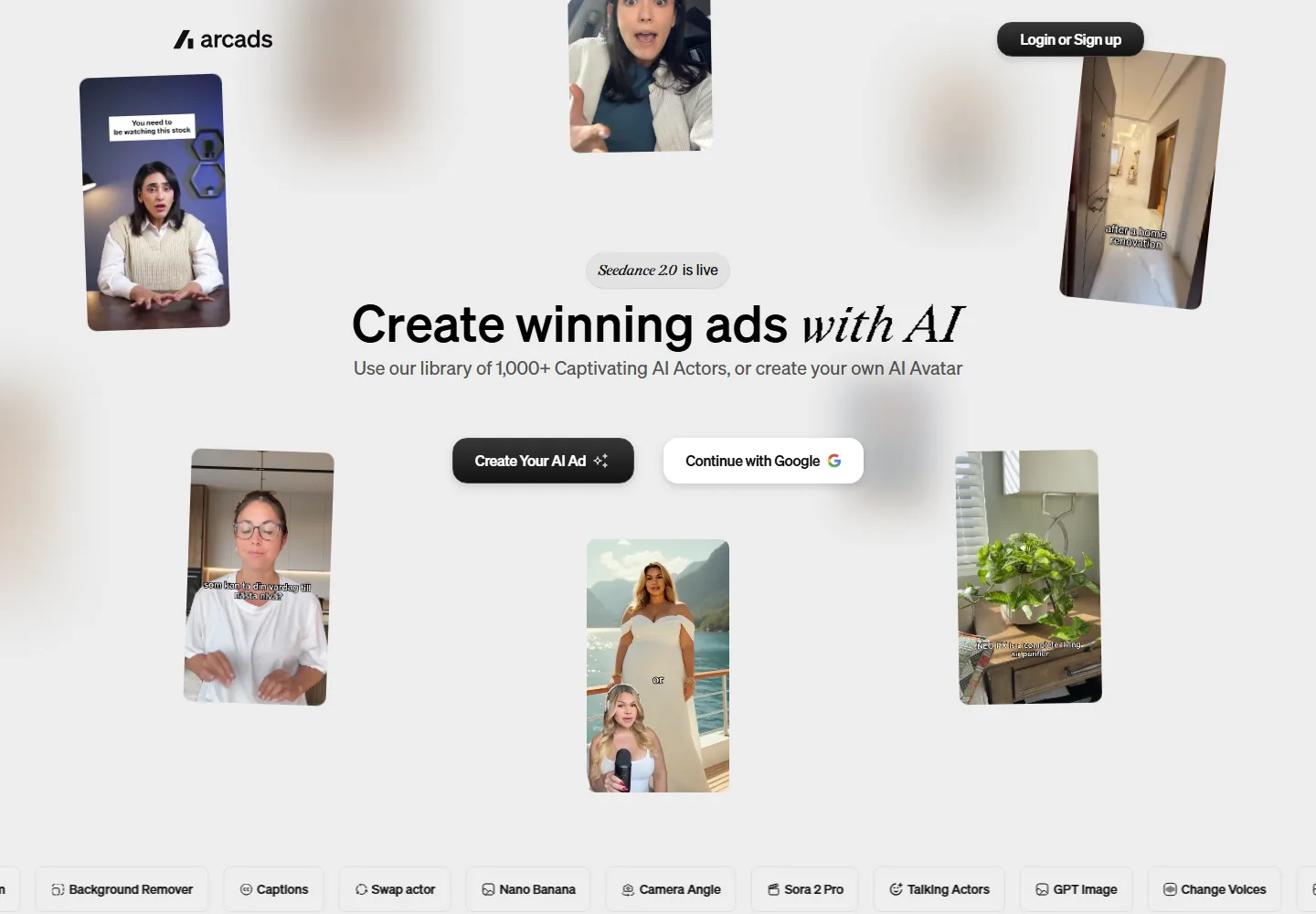
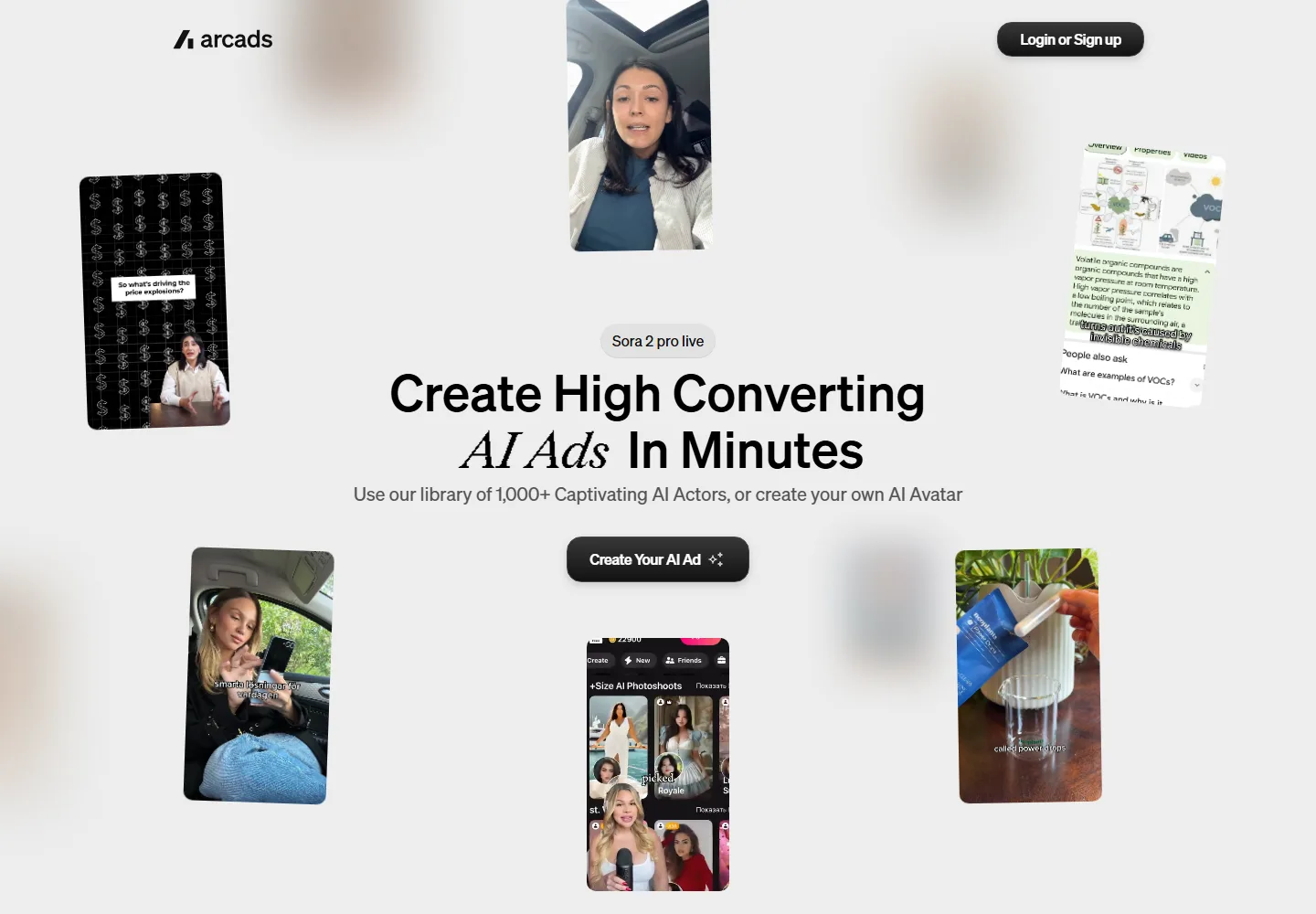
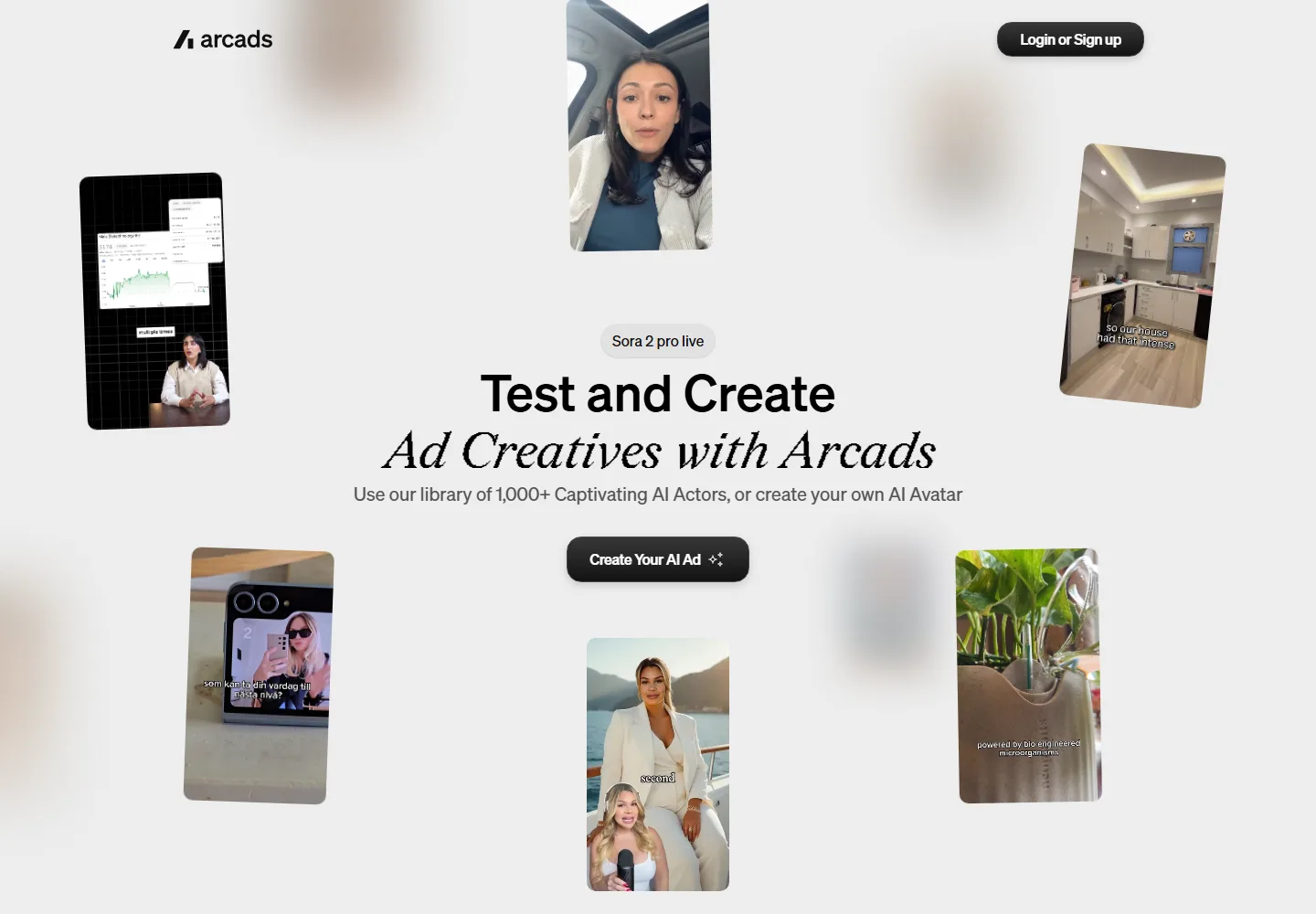
Arcads solves a real bottleneck. Testing UGC-style video advertising properly means many variations of hook, framing and script, and producing those with real creators is slow, expensive and hard to schedule. Generating them from a library of over a thousand AI actors is none of those things.
The output is good enough that this is worth taking seriously, and good enough that the questions below are not academic.
What it does
An actor library of over 1,000 faces, custom avatar generation that can place your product in their hands or your app on their screen, in-app editing with B-roll, music, captions and transitions, and translation into more than 30 languages. For an advertiser who wants to know which of fifteen hooks works before committing budget, that is a coherent and useful package.
Localization deserves particular note. Producing a campaign in thirty languages with real creators is a project. Doing it from one script is a task.
The gap in the documentation
Nothing published explains how the AI actors were created. Whether they are fully synthetic faces, licensed likenesses of real performers, or some combination, and what consent was obtained in either case.
That matters to you rather than only to the vendor, because you are the one putting the face in front of an audience with your brand attached. The three possibilities carry different exposure, and you cannot assess which applies from the marketing.
This is answerable. Vendors in adjacent categories require a recorded consent statement from a speaker before a voice or likeness can be cloned, which establishes that documenting consent is achievable rather than an unreasonable ask. Put the question in writing before you scale, and keep the reply.
The disclosure question the format creates
UGC advertising works because it reads as a real person’s honest experience. That is the entire mechanism.
A synthetic actor delivering testimonial-style copy about a product they have not used sits awkwardly against endorsement rules, which generally require that a testimonial reflect an actual endorser’s honest opinion and that material connections are disclosed. The better the output, the sharper this gets, because the persuasive power comes precisely from the audience believing they are watching a customer.
None of this makes the tool unusable. It makes it a tool that needs a policy: what your ads claim, how the synthetic nature is signalled, and who signed off. Direct response teams tend to discover this question after a complaint rather than before, and the sequencing is worth changing.
Where it fits
The pattern that survives scrutiny is synthetic for discovery and real for scale. Use Arcads to find which hook, which framing and which language variant performs, cheaply and quickly. Put the winner behind a real creator with a real agreement when it is taking most of your spend. That gets you the speed without building your best-performing campaign on an unanswered rights question.
No pricing is published, so budgeting requires a conversation, which is worth weighing against competitors in this category that publish full tier lists.