
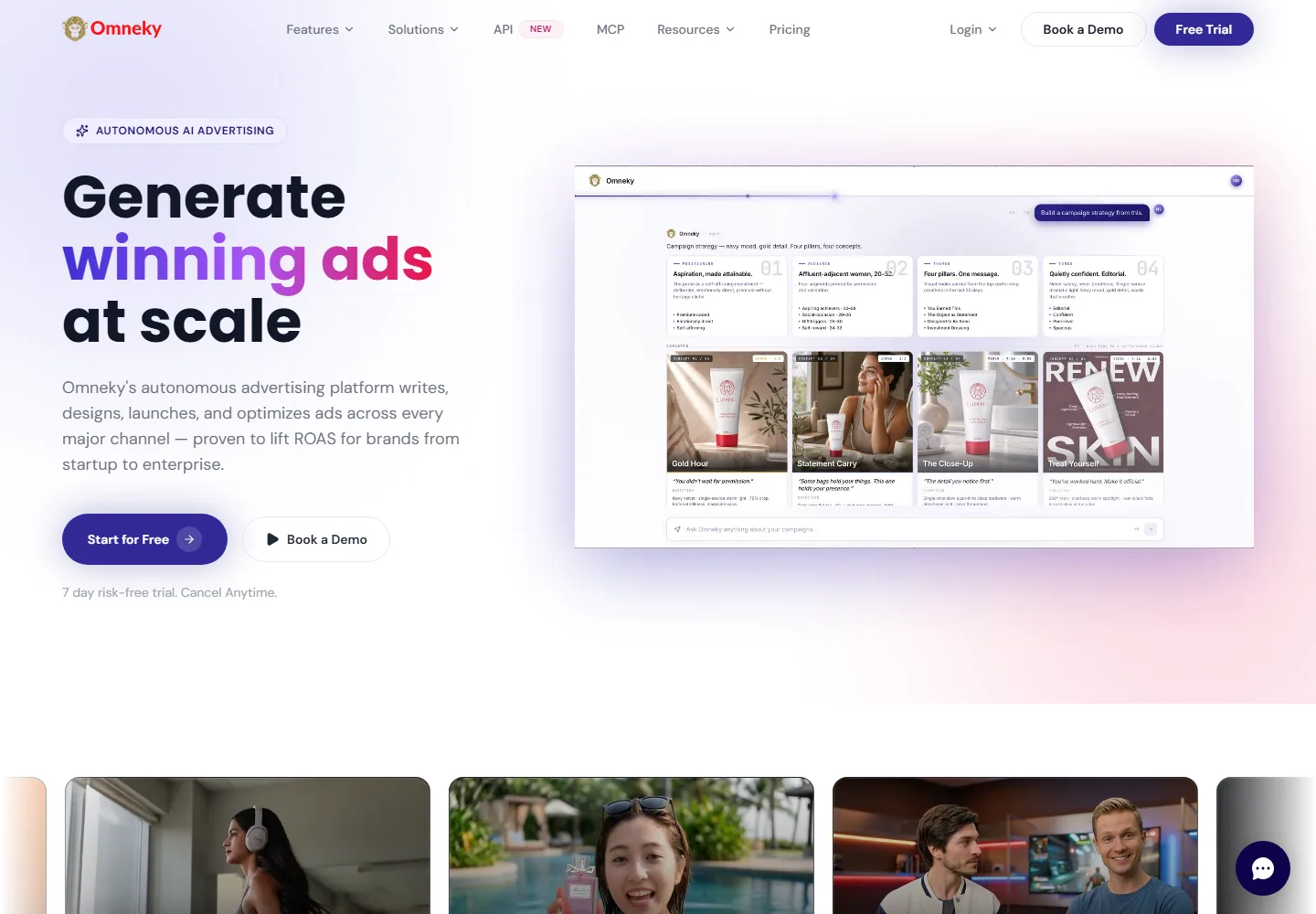
Omneky attempts the whole loop: generate creative, launch it across five channels, then analyze what worked using computer vision on the assets themselves. Few competitors try all three, which makes it the broadest product listed here and the hardest to assess from outside.
The genuinely interesting part
Most creative reporting tells you which ad won. That is useful once and does not generalize, because next month’s assets are different.
Computer vision analysis works at the level of attributes rather than assets: whether faces outperform product-only shots in your account, whether text-heavy frames underperform, whether a colour range correlates with completion. If it works, that transfers to the next batch and to briefs you have not written yet, which is a different order of usefulness.
The caveat is statistical rather than technical. Attribute-level correlation needs a decent number of assets and a decent number of conversions before it says anything reliable. An account running six creatives a month will get confident-looking analysis built on almost nothing. Ask directly how many assets the analysis needs before it is worth reading, and treat a vague answer as an answer.
Breadth as a trade
Spanning generation, distribution and analysis is the pitch. It is also a warning, because a two-year-old category rarely produces a product that is equally mature at three quite different jobs. Something here is newer and thinner than the rest, and the public marketing does not reveal which.
The practical test during evaluation is to press hardest on the component you would depend on most. If you would buy it for the creative analysis, spend the demo there rather than watching generation demos, which is the part every competitor also does.
The permission question
Because Omneky launches campaigns as well as making them, using it means giving a creative vendor access to live ad accounts. That removes a genuine friction, and it also means the tool can spend money.
This deserves a decision rather than a click-through during onboarding. Scope permissions to the minimum the workflow needs, establish who approves a launch, and confirm what audit trail exists when something goes out. Marketing teams routinely grant broad access at setup and never revisit it, which is fine until it is not.
What cannot be established from outside
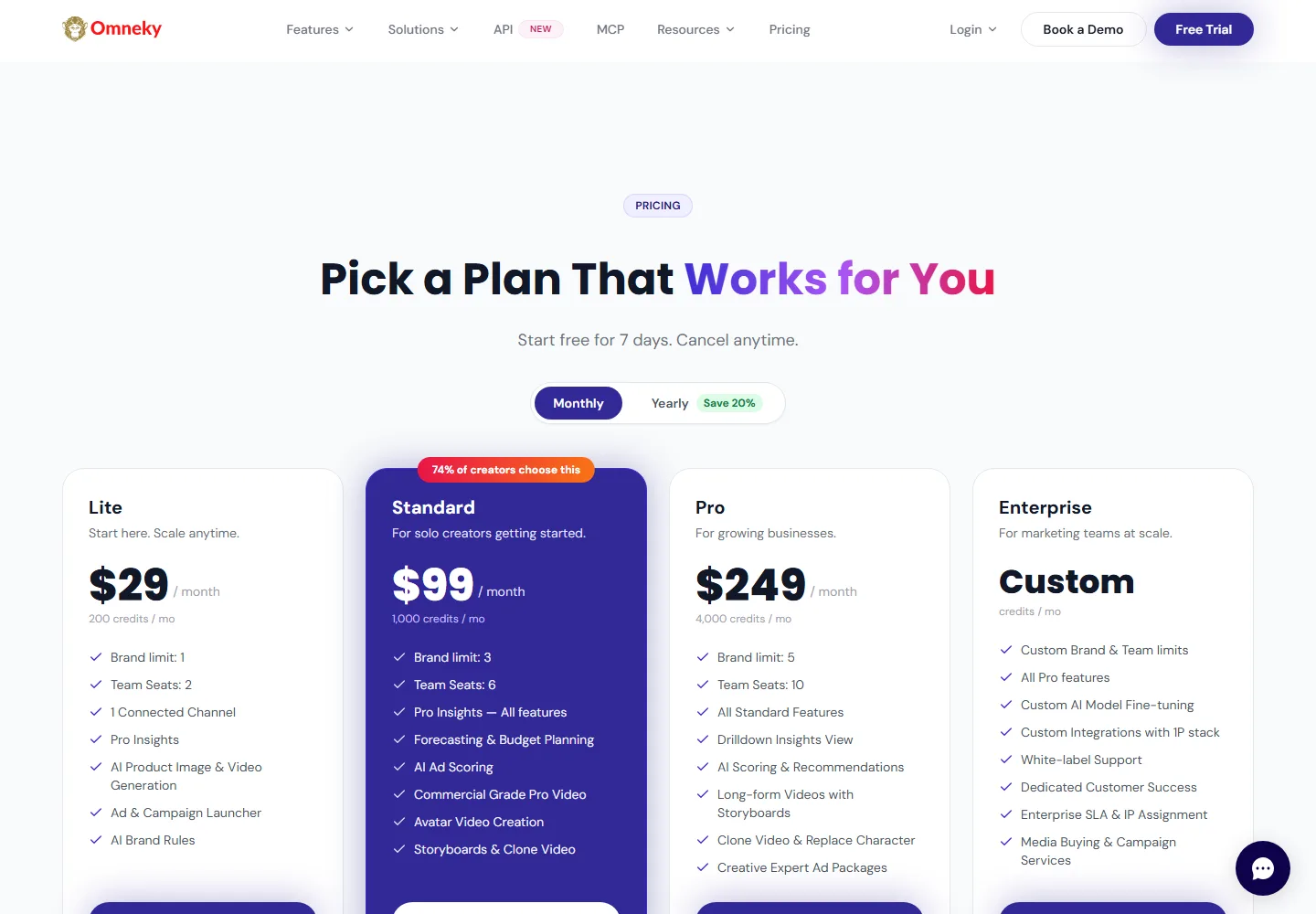
No pricing, no named customers, no funding detail and no performance evidence appear in public marketing. That is a limit on this page rather than a criticism of the product: an entry built from public documentation can only record what is documented, and here there is less than most competitors publish.
For a multi-channel advertiser whose weekly cost is coordination rather than production, this is worth a conversation. For a single-channel team, a specialist will go deeper for less effort.