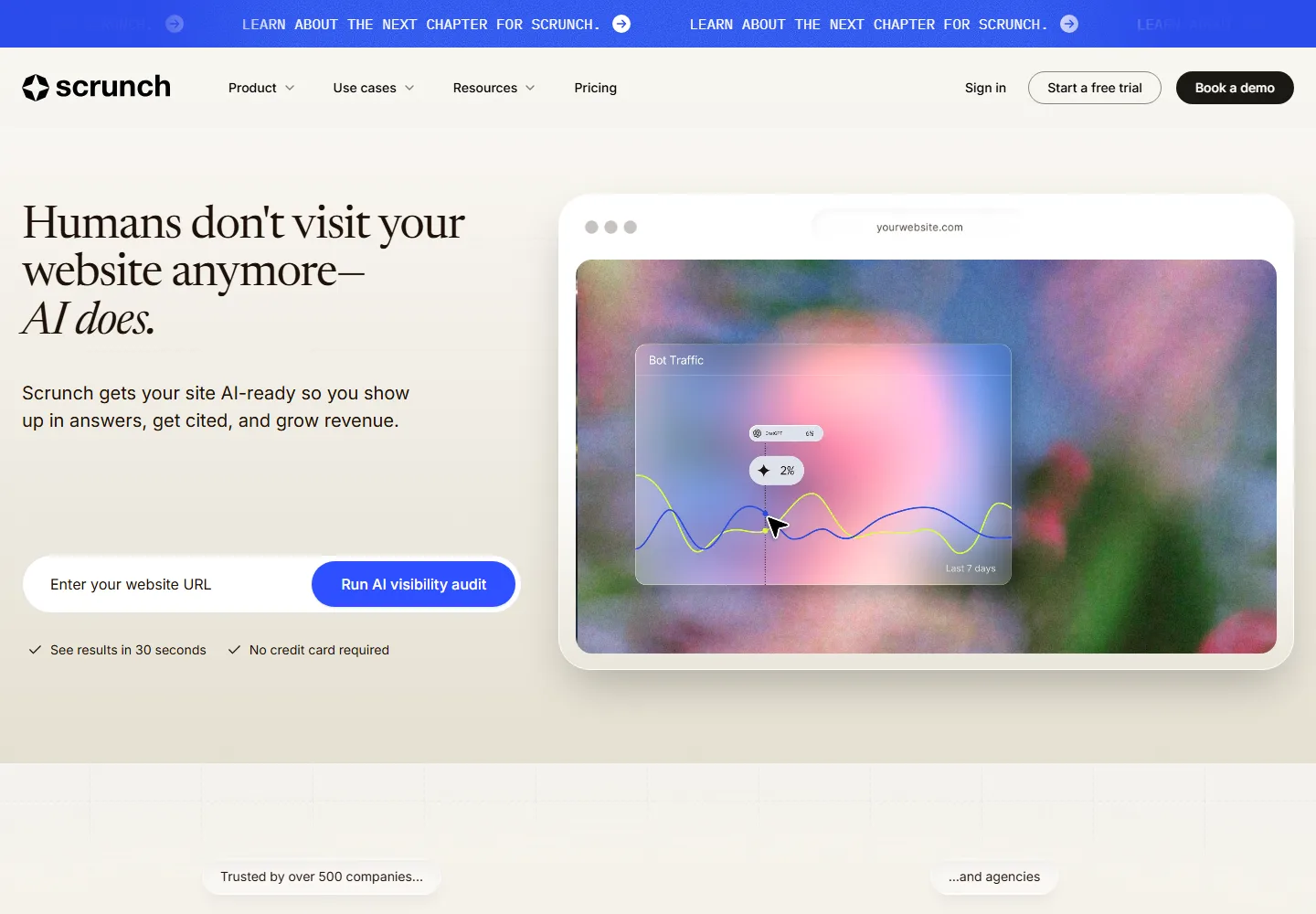
Scrunch AI does two things. The first is conventional and competent. The second is the more consequential of the two, and the one that needs the most thought before you deploy it.
The conventional half
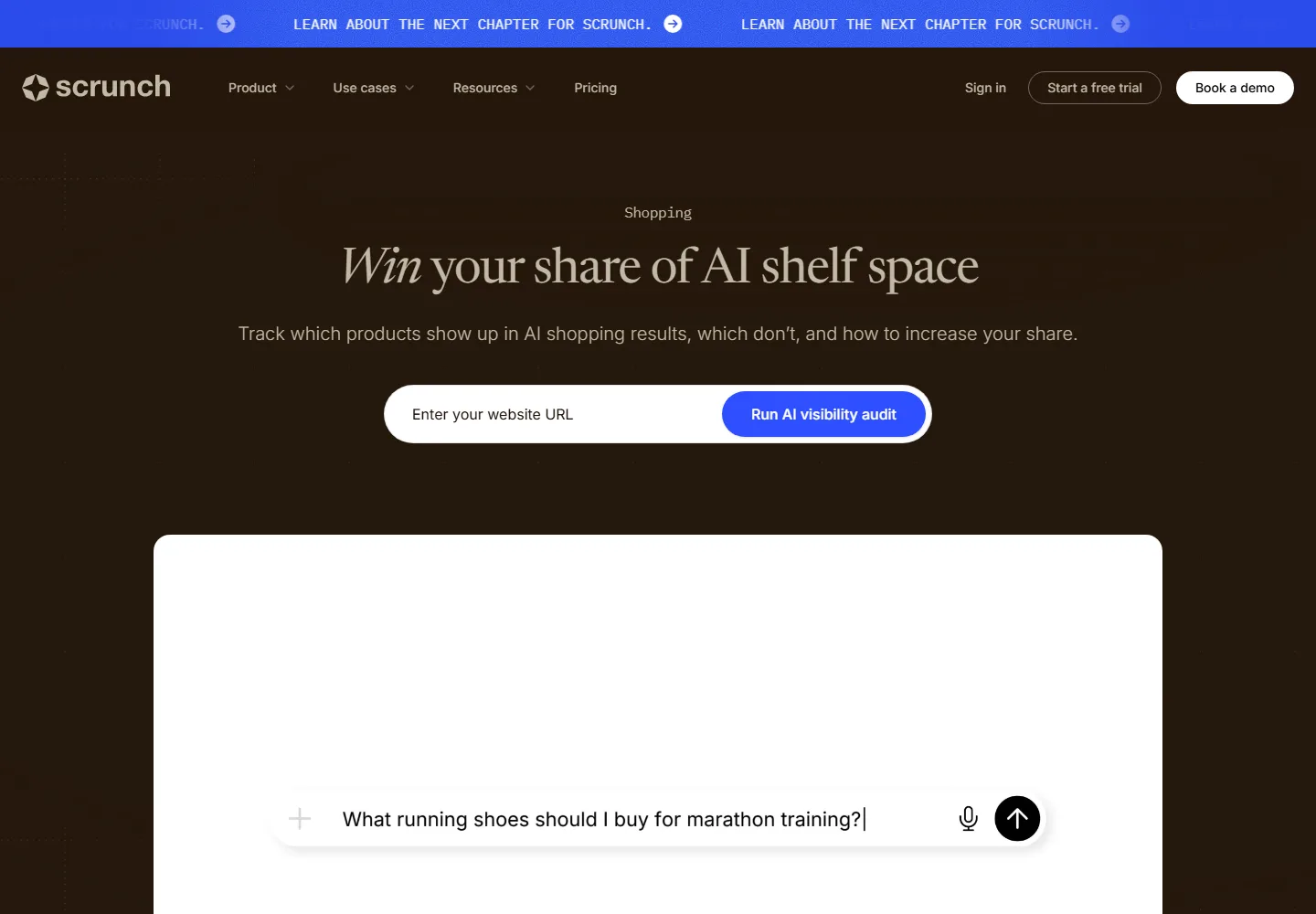
Monitoring across ChatGPT, Perplexity, Claude, Gemini and Copilot, with prompt analytics, citation rankings and competitor benchmarking. This is table stakes for the category and Scrunch appears to do it properly.
The genuinely valuable piece is crawl error detection. Of everything sold in AI search visibility, retrieval is the only part with a clear causal chain: if an engine’s crawler cannot fetch and parse your content, nothing downstream can help. A heavily client-side rendered site can be invisible to bots for reasons that have nothing to do with content quality. Finding that out is worth more than any share-of-voice score, and it is fixable with certainty rather than inference.
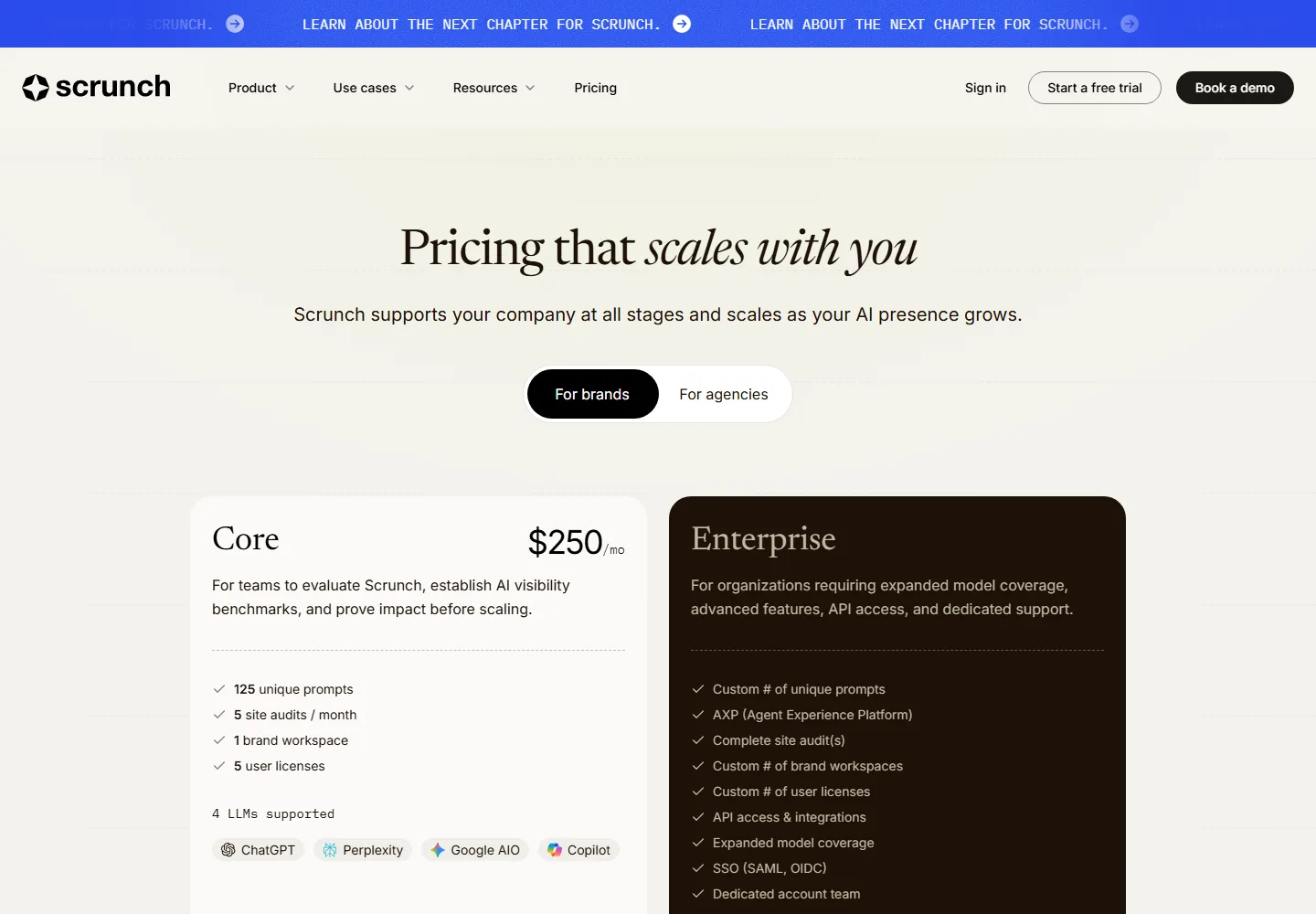
The commercial signals are also stronger than most of this category. A stated 15 million dollar Series A, 500 or more customers, and named references including Lenovo, Skims, Crunchbase and Penn State. There is a 7 day free trial, which is rare here.
The half that needs a decision
The Agent Experience Platform delivers lightweight, AI-optimized versions of your pages to agents, described as not affecting the human user experience.
Read that sentence again, because it describes serving different content to bots than to people. That is the definition of cloaking, which Google’s spam policies treat as a violation and which the SEO industry has treated as a serious risk for two decades.
There is a defensible version of this. Serving the same substance in a form a machine can parse more easily, without changing the claims, the pricing or the substance, is closer to progressive enhancement than deception. Content parity is the test.
There is also an indefensible version, where the bot version is enriched, or asserts things the human page does not. The tooling does not enforce which one you build.
Two things make this riskier than it might appear. AI answer engine operators have not published cloaking policies with Google’s specificity, so the absence of a stated rule is not permission. And several of these engines share infrastructure and data with Google’s index, so a practice that is fine in one surface may not be isolated from another.
How to approach it
If your problem is that AI crawlers cannot read your site, this product addresses a real and causally clear issue, and the crawl detection alone may justify it. Use AXP with a strict content parity rule, decided by someone accountable for it, and documented.
If your problem is that you are not cited enough, AXP is not obviously the fix, and the risk is real while the benefit is inferred. No pricing is published, so as elsewhere in this category, forming a view on value means a sales conversation.