 Tool profile
Profound
Enterprise AI search visibility, including how AI crawlers read your site
Profound measures brand visibility across AI answers and extends into crawler-level analytics showing how AI bots read your site, which most of this category does not cover. It publishes no pricing at all, so evaluating it means a sales cycle before you learn the budget.
Visit ProfoundIs Profound worth it?
- What it is
- Enterprise AI search visibility, including how AI crawlers read your site
- Worth a look if
- You need crawler-level data on how ChatGPT, Gemini, Claude and Perplexity fetch and interpret your site, with budget approved before price discovery.
- Skip it if
- You are a small team or a startup, where a quote-only process is a poor use of scarce time, or you want to start small and expand.
- Cost to start
- Not published. Pricing is quote only, via demo request. Trial only. A Trial tier listed as free, with no terms published.
Profound screenshots
Profound at a glance
| Job category | AI Search and GEO |
|---|---|
| What it replaces | Guessing what people ask AI about your category |
| Pricing model | Trial only |
| Starting price | Not published. Pricing is quote only, via demo request. |
| Free tier | A Trial tier listed as free, with no terms published. |
| Getting started | Free trial |
| Built for | Enterprise marketing teams with budget approval before price discovery |
| Company | Not published |
| Last verified | August 2026 |
Profound pricing and plans
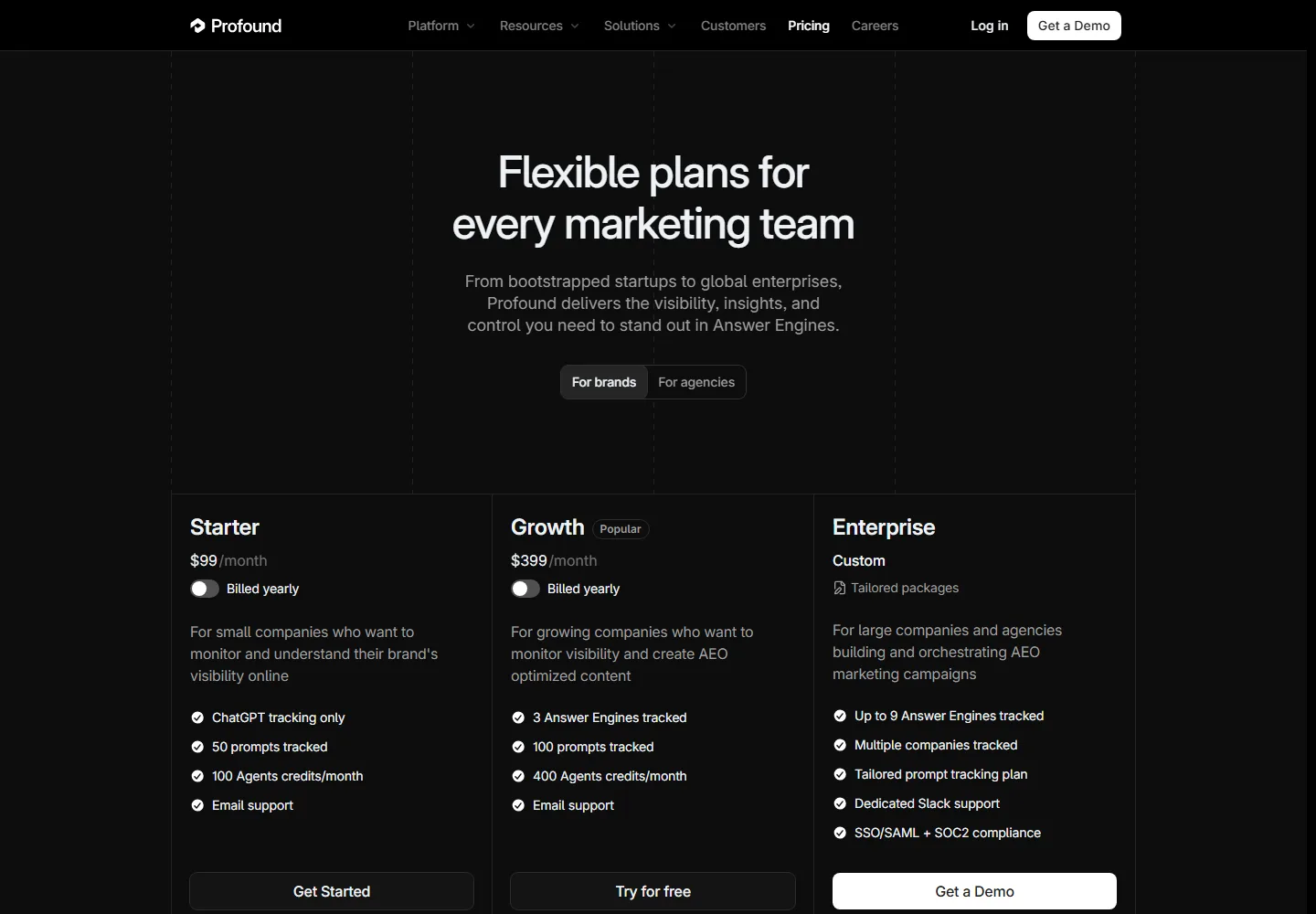
Profound does not publish pricing. Not published. Pricing is quote only, via demo request. A Trial tier listed as free, with no terms published.
- The pricing page names two tiers, a free Trial and a custom Enterprise, and attaches no figure to either.
- The free Trial is listed without duration, limits or card terms, so what it covers cannot be established before signing up.
No pricing page exists. Budget cannot be estimated without a sales conversation, which is worth factoring into evaluation time alongside the licence cost itself.
Profound features: what it does
- Agent Analytics tracks how ChatGPT, Gemini, Claude and Perplexity crawl and interpret your site, which most competitors do not attempt
- Prompt Volumes data addresses the question everything else in the category dodges, which is what people actually ask AI
- Coverage spans eight named engines including Grok, DeepSeek and Copilot alongside the obvious ones
- Segmented by team function rather than a single dashboard, which suits larger organizations with separate AEO, content and PR owners
Profound limitations
- No pricing published anywhere, so there is no way to assess affordability without entering a sales process
- Quote-only pricing in a young category means you cannot benchmark the proposal against anything public except AthenaHQ
- The autonomous agents framing promises more independence than any tool in this category can currently justify
- Only one named customer reference appears publicly, so adoption breadth is hard to verify
Who Profound is for
| Your situation | What that means here |
|---|---|
| Enterprise marketing team | The intended buyer. Budget approval before price discovery is assumed by the whole sales motion. |
| Technical SEO lead | Agent Analytics shows how ChatGPT, Gemini, Claude and Perplexity crawl and interpret your site, which most competitors do not attempt. |
| Small team or startup | A quote-only process is a poor use of scarce time when competitors publish full tier lists. |
| Agency across several large brands | Coverage and depth suit multi-brand work, though pricing has to be negotiated rather than compared. |
| Strategist choosing what to track | Prompt Volumes addresses what people actually ask AI, which is the question most of this category leaves to guesswork. |
| Buyer who wants to start small and expand | Nothing published supports a small start, and there is no self-serve entry. |
Profound use cases for marketers
- AI crawler diagnostics through Agent Analytics, tracking how AI systems read the site rather than only whether the brand appears.
- Prompt research through Prompt Volumes, covering what people actually ask AI.
- Agency and enterprise reporting segmented by team function across eight named engines.
Profound FAQ
What is Agent Analytics, and why does it matter?
It tracks how AI crawlers fetch and interpret your site, rather than only what engines say about you. Crawlability problems are fixable with certainty, while citation recommendations are inference. If an engine cannot retrieve your content, optimizing it does not help.
Is Profound worth the sales cycle for a small team?
Usually not. The product is shaped for organizations with separate AEO, content and PR functions, and the evaluation cost in demos and internal approvals is significant against a small team’s capacity.
Profound sources and references
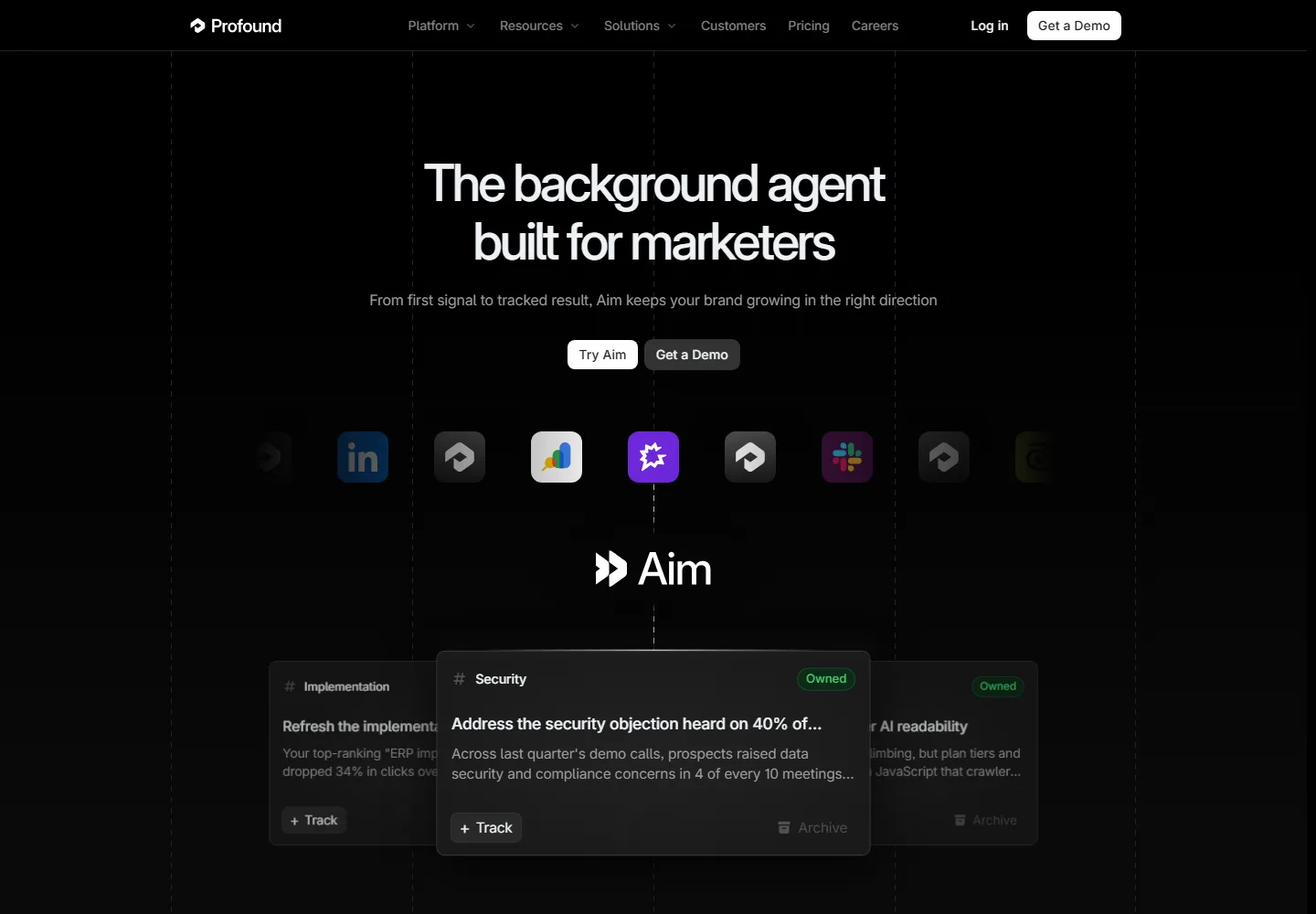
- Profound describes optimizing brand visibility across Perplexity, ChatGPT, Claude, Gemini, Grok, Microsoft Copilot, DeepSeek and Google AI Overviews, with named features including Answer Engine Insights, Prompt Volumes, Agents, Agent Analytics for tracking how AI systems crawl a site, and Aim. Solutions are segmented for AEO, content, PR and agency teams. No pricing is published and the site directs visitors to request a demo.tryprofound.com
- Profound publishes two tiers on its pricing page: a Trial listed as Free and an Enterprise tier listed as Custom with tailored packages, directing buyers to book a demo. No figure, currency or billing period is given for either.tryprofound.com
Compiled by Alston Antony from the sources above:how we compile these entries and ouraffiliate disclosure.