Rankscale tracks more AI engines than anything else reviewed on this site, and it does two things beyond visibility scoring that most competitors leave out. Both facts sit alongside a company founded in October 2024.
What the breadth includes
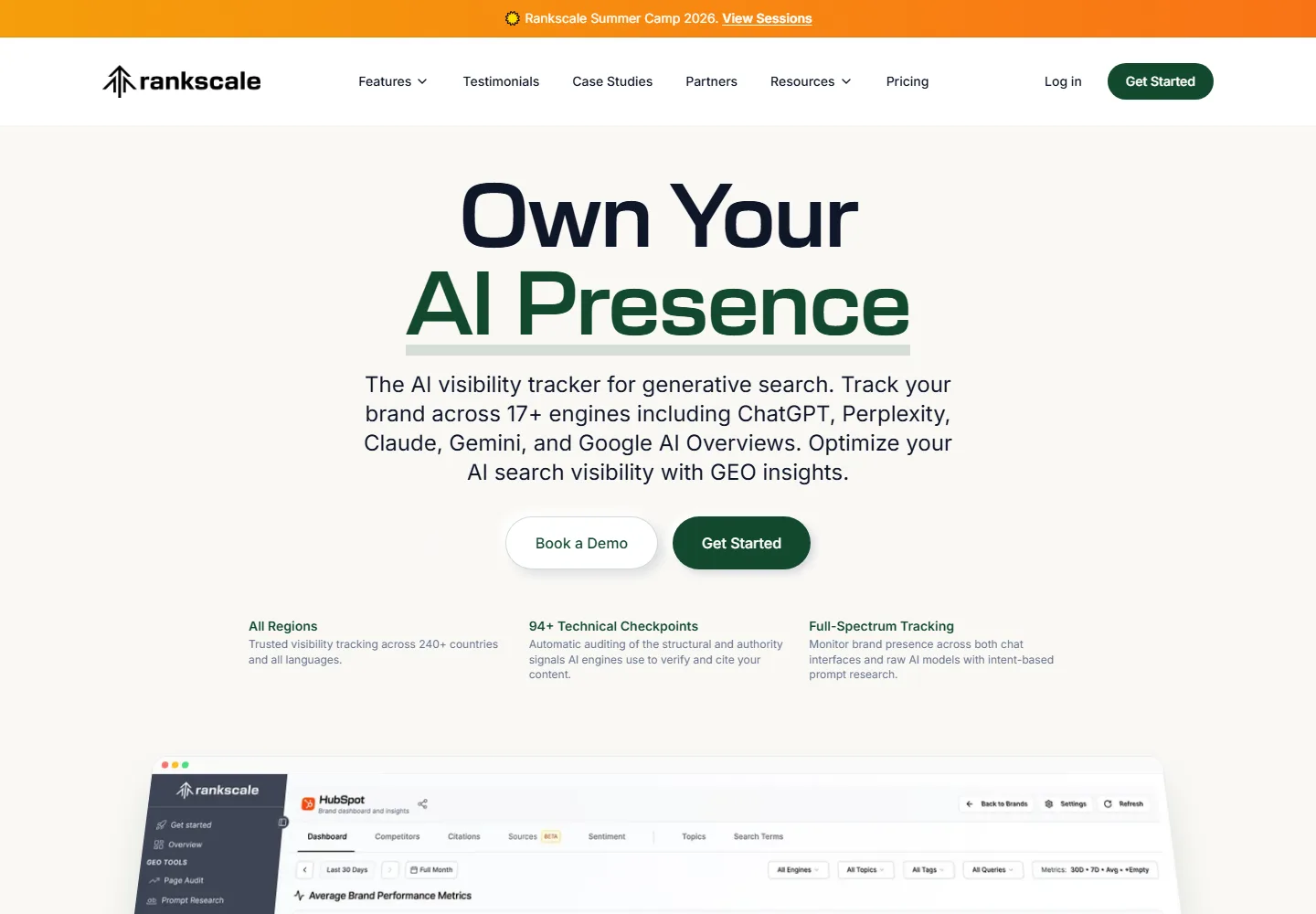
Seventeen or more engines, extending past the usual ChatGPT, Perplexity, Claude, Gemini and AI Overviews into DeepSeek, Grok, Copilot and Mistral.
Whether that helps depends entirely on your buyers. Coverage breadth is the easiest thing in this category to market, because adding an engine to a list costs far less than sampling it rigorously. The useful question is not how many engines but which ones your customers actually consult, and after that, how many times each prompt is sampled against each engine. Nobody in this category publishes the second figure, including Rankscale, and it is the one that determines whether any number is signal.
The two features that go further
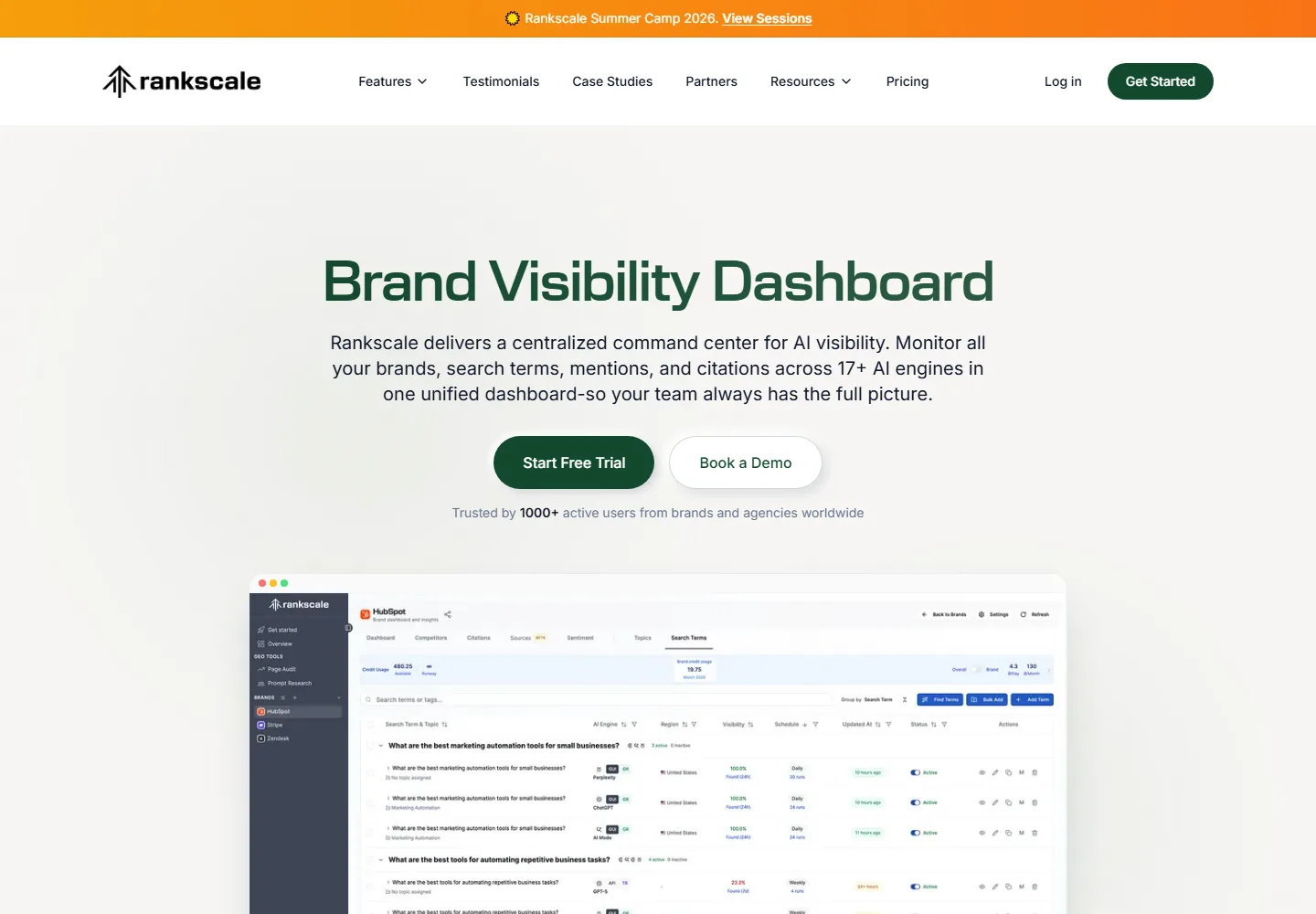
Page audits evaluating more than 200 technical factors is the standout. Of everything sold in AI search visibility, retrieval is the only part with a clear causal chain: if an engine’s crawler cannot fetch and parse your content, no amount of content strategy will get you cited. That work is deterministic and verifiable, unlike optimization recommendations which are inference from correlation.
Prompt research with volume estimation is the second. Most tools let you invent the prompts you track, which means your measurement inherits your assumptions about what buyers ask. Grounding prompt selection in estimated demand attacks a real weakness, with the usual caveat that the basis for those estimates is not published.
Competitor auto-identification is convenient and worth interrogating. Something decides who counts as your competitor, that decision shapes every comparison you then see, and the basis for it is not described.
The age question, handled honestly
Founded October 2024. Tripled the team by January 2026. More than 2,000 active users, including Bosch, UBS, Cartier, Dentsu and WPP Media.
Those two facts pull in opposite directions and both are real. The product is young, the historical data series is necessarily short, and the company has no long track record. Against that, enterprises and major agency groups have already bought it, which is meaningful validation that a marketing page cannot manufacture.
The proportionate response depends on your procurement. If vendor longevity is a hard requirement, this will not clear it. If you are buying into a category that is itself barely two years old, every option is young, and holding Rankscale to a standard that would disqualify its entire market is not a useful filter.
The pricing gap now stands out
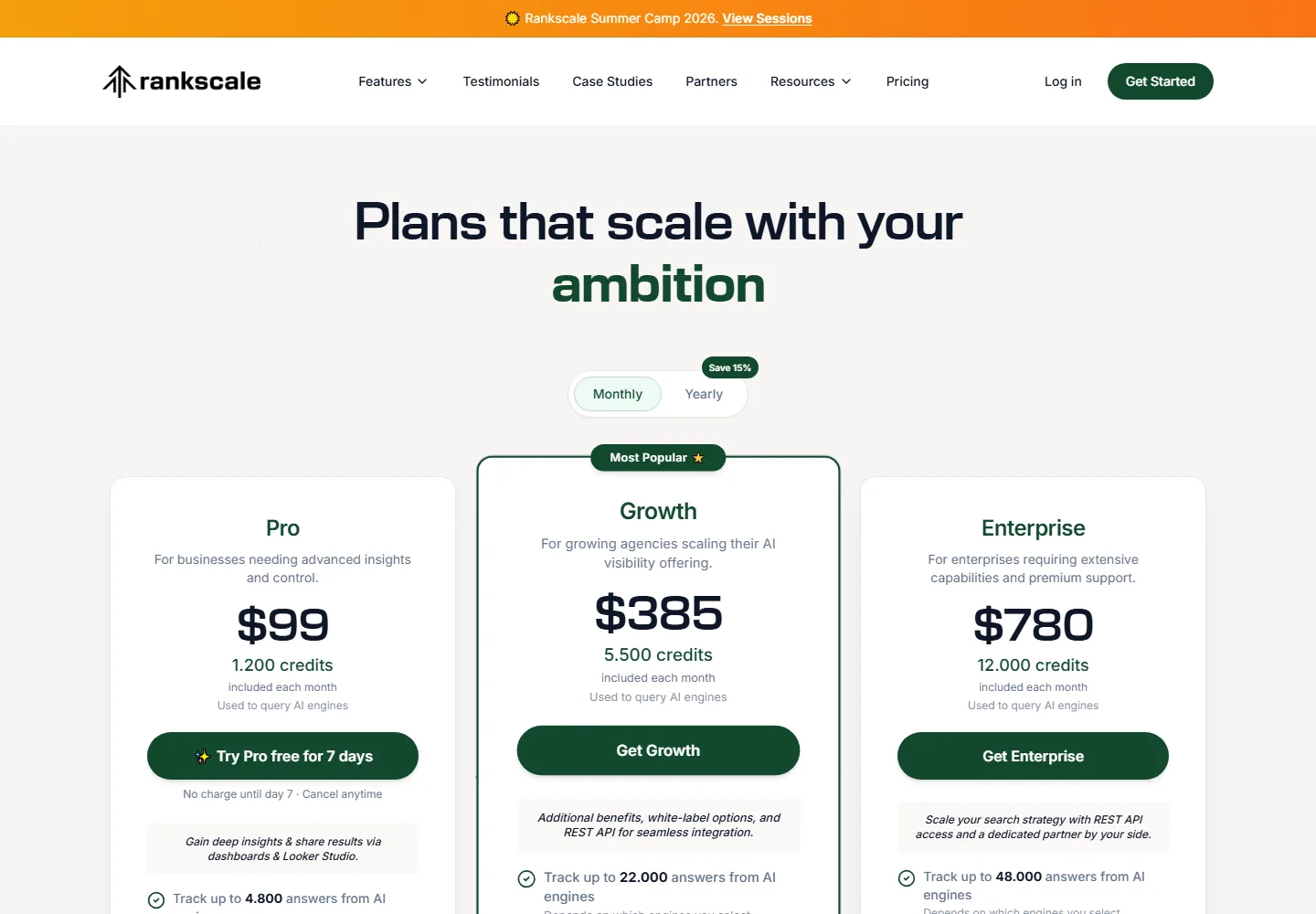
When this site first reviewed GEO tools, almost nobody published pricing and Rankscale would have been unremarkable. That has changed within the category: LLMrefs publishes a flat 79 dollars, OtterlyAI starts at 29, AthenaHQ at 295.
Against that, quote-only pricing now looks like a choice rather than a category convention. Ask for the number on the first call and benchmark it against those three.