

Almost every tool on this site makes claims about what will perform. Persado is the only one whose evidence base is experimental rather than observational, and that difference deserves to be stated clearly before the caveats.
Why the method is genuinely different
Most language tools learn from text: what people wrote, what got published, what patterns appear in a corpus. That is correlational. It tells you what tends to accompany what, not what caused anything.
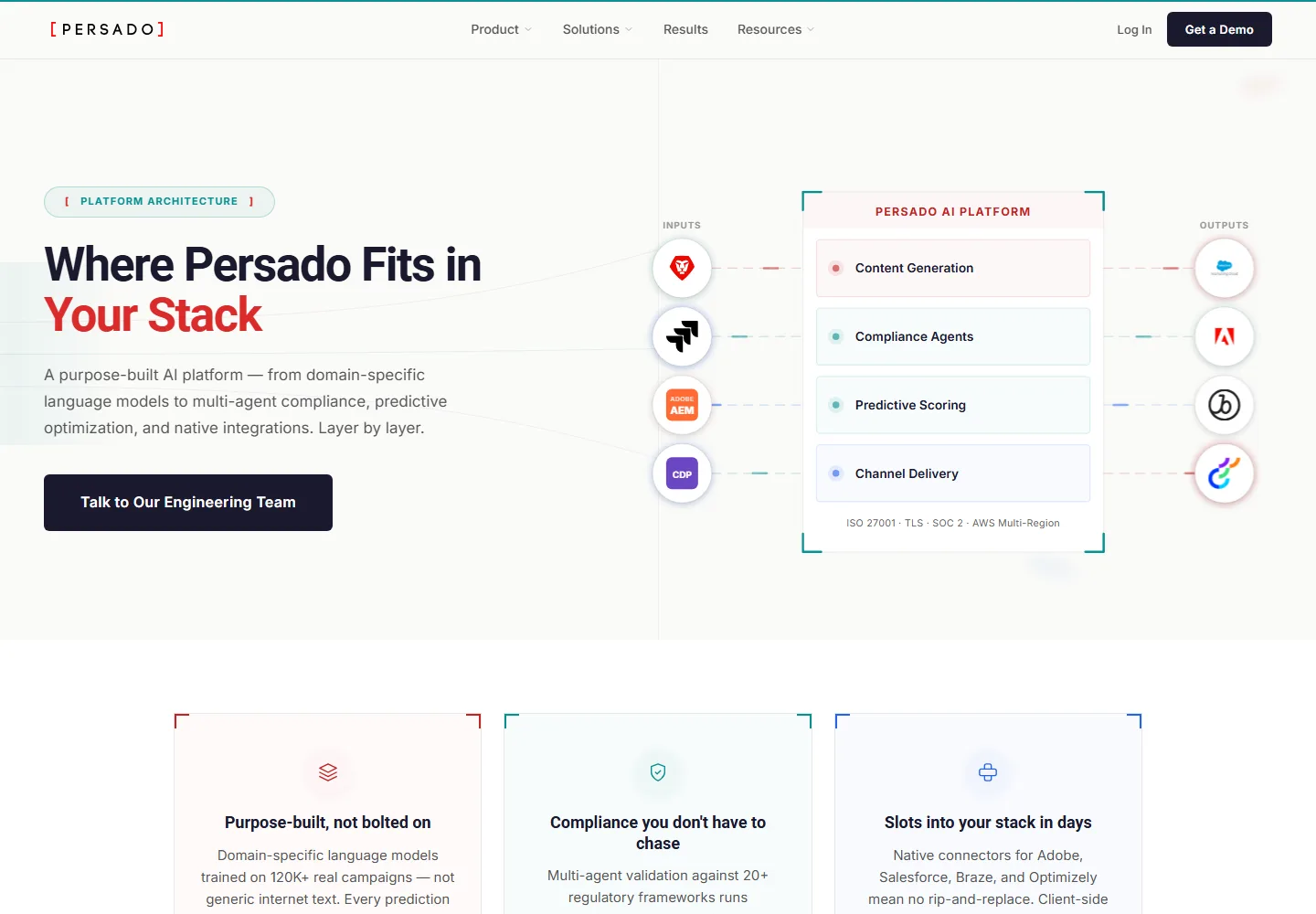
Persado’s stated foundation is over a million A/B tests, mapped into a network of causal relationships, alongside a knowledge base of 100,000-plus message elements categorized by emotional driver and call to action type. A/B tests are randomized experiments. Evidence drawn from them is causal by construction, in a way no amount of scraped text can be.
That is a meaningfully better foundation, and it earns the product a hearing that similar-sounding claims elsewhere do not.
The element-level structure compounds it. Learning that a particular emotional framing outperformed for a particular offer type transfers between campaigns in a way that “this subject line won” does not.
Where the caveat sits
Causal evidence from other companies’ audiences transfers to yours under assumptions nobody publishes. Financial services customers may respond to an urgency framing differently from telecom customers, and both differently from yours. The network is a strong prior, not a result.
The practical implication is that Persado should make your testing better rather than replace it. Use the predictions to choose what to test, then let your own experiment decide. A tool built on a million A/B tests is, ironically, the last one that should be used to stop running them.
The claims that are not evidence
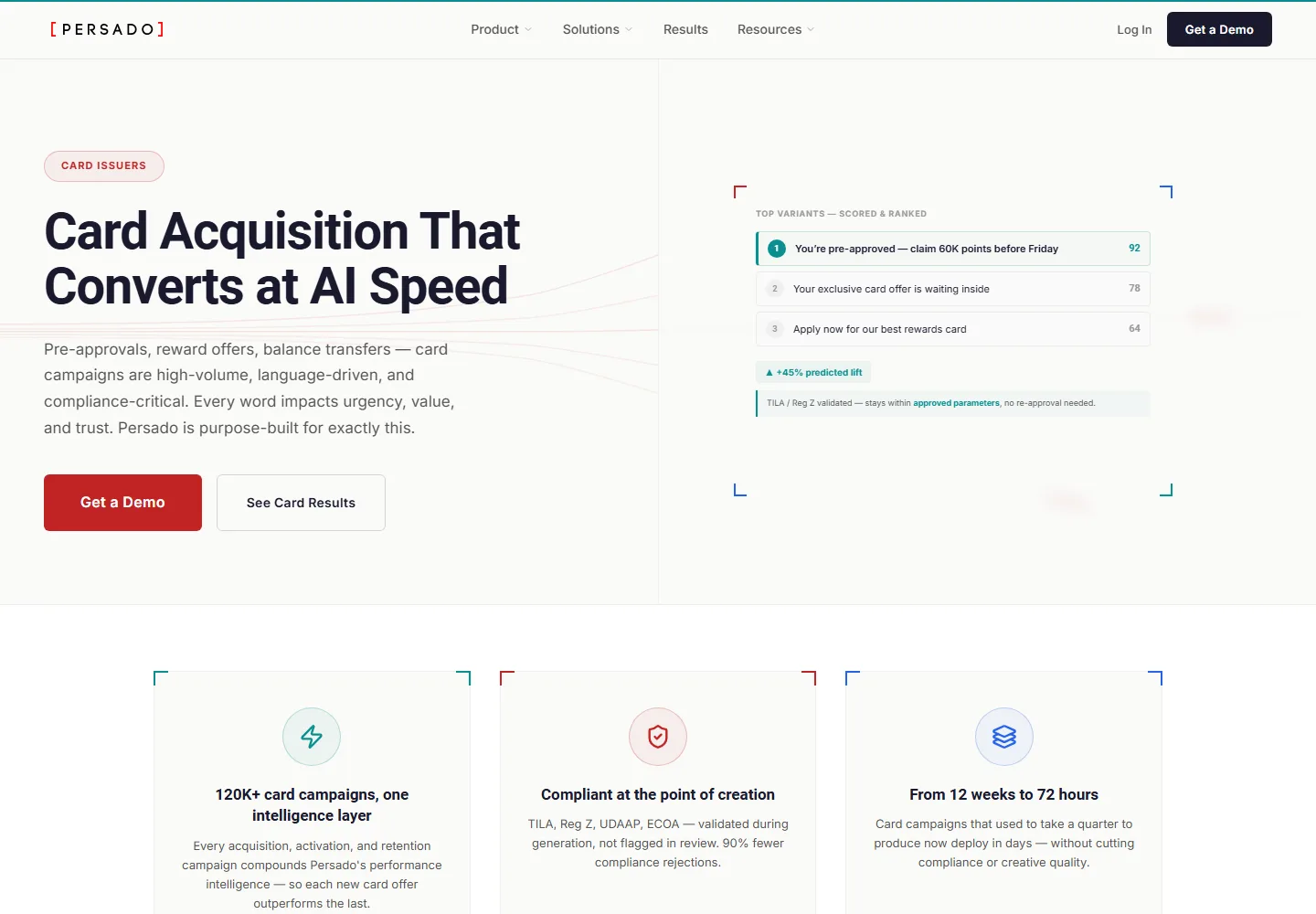
Outperforming humans and generic AI 96 percent of the time is published without a test design, a baseline or a sample. Plus 57 percent new accounts at Ally and plus 42 percent conversion lift at Vodafone Italy are vendor-reported case studies with no published control.
This matters more here than elsewhere precisely because the underlying method is rigorous. A company holding a million experiments is exceptionally well placed to state a methodology, so the absence of one around its headline numbers is a choice. Ask for it. The speed and specificity of the answer will tell you a great deal.
What it is actually for
The strongest argument for Persado is not conversion lift, it is compliance throughput. In regulated marketing, legal review is the bottleneck. Campaigns wait weeks for approval regardless of how fast the copy was written, and a rejected variant costs another cycle.
Generating variants pre-screened against compliance constraints attacks that directly, and a claimed 90 percent reduction in compliance rejections describes a larger operational change than any percentage on a landing page. For a bank sending at volume, that alone can justify the platform.
For a small sender, none of this expresses itself. The corpus advantage needs volume to show up, and the compliance advantage needs a compliance function to relieve.