
Optimove sells multichannel CRM marketing orchestration, and it does that competently. The more useful thing to study before buying is not the feature list but who else is on it.
Read the customer list first
Sephora, Staples, Penn Entertainment, Kindred Group, Entain, Bet365, FDJ, Caesars, Kaizen Gaming, MyHeritage.
That is heavily weighted toward gaming, betting and high-frequency retail. It is not an accident and it is not a criticism, but it tells you what the platform is optimized for: customers who transact often, churn visibly, and generate dense behavioural data that models can learn from quickly.
Retention platforms are shaped by the economics of the businesses that funded their development. If your customers buy several times a month, this machinery has plenty to work with and the reference stories will resemble your situation. If they buy twice a year after long consideration, the same features have far less signal, and the case studies describe a different kind of business.
This is a fit question rather than a quality one, and it is the first thing to settle.
What the platform does
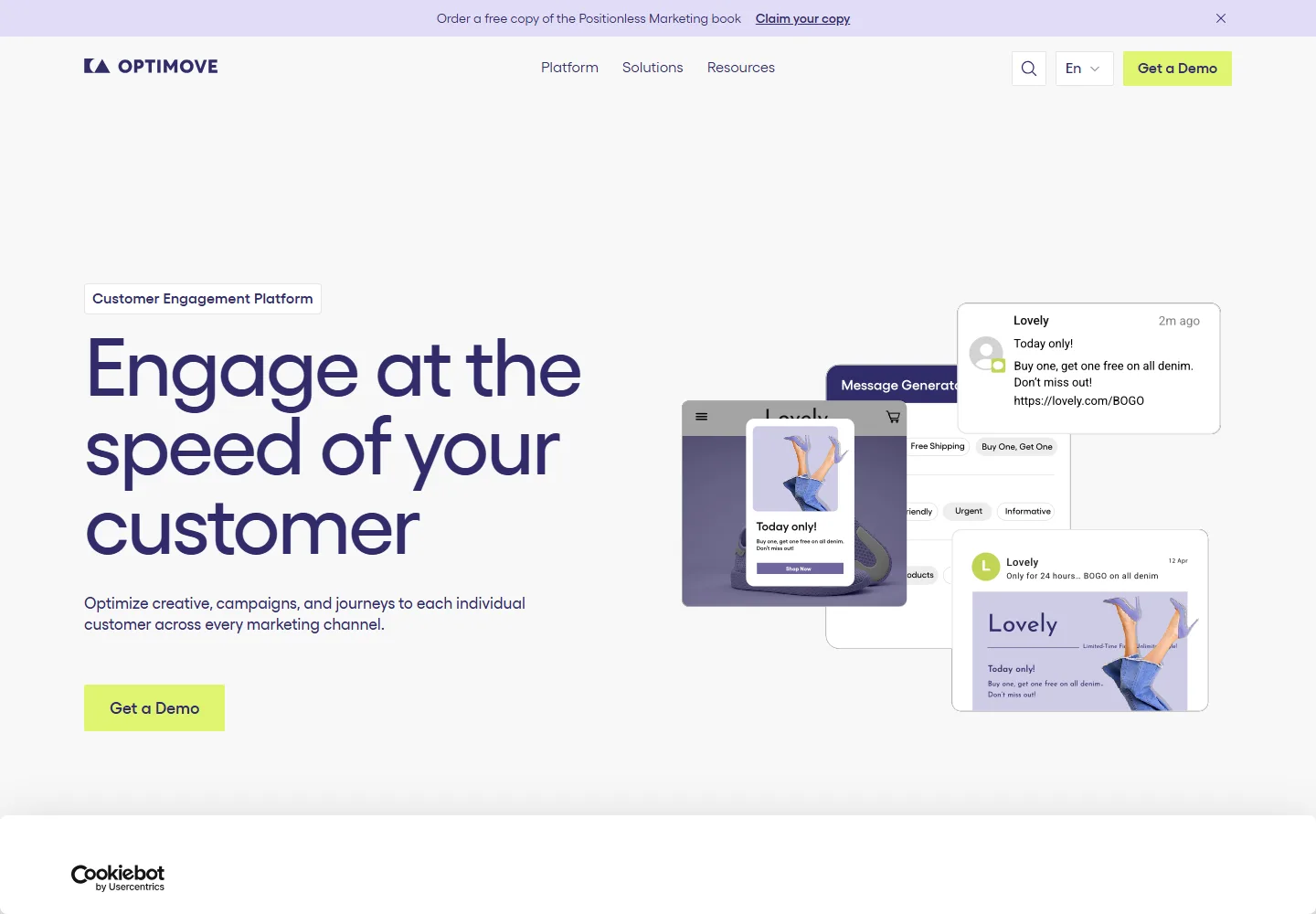
Four components. Orchestrate builds multichannel journeys with AI decisioning. Engage handles personalized delivery at scale. Personalize covers dynamic content on sites and apps. Gamify connects loyalty and rewards, which is unusual as a first-class capability and again reflects the customer base.
Channel breadth is genuine, covering email, SMS, mobile, web, ad networks and WhatsApp from one orchestration layer. For a retention team currently coordinating three tools and reconciling their reports, consolidation is the real argument.
Applying AI to journey decisioning rather than only to content generation is also the right emphasis. Deciding who to contact, through which channel and when, is where the value in lifecycle marketing sits; generating the copy is the easier half.
The omission worth raising
Nothing in the public material describes holdout groups or incrementality measurement.
For a retention platform this is the central question, not a peripheral one. The point of a lifecycle campaign is to change what a customer would otherwise have done, and you cannot know whether it did without a control group of comparable customers who were left alone. Without that, a campaign to your most engaged segment will always look successful, because engaged customers were going to return anyway.
Absence from a marketing page is not evidence the capability is missing. It is a reason to ask specifically: are permanent control groups supported, how is lift calculated, and can a campaign be run against a holdout by default rather than by exception. Get answers before signing, because this determines whether the reporting you receive for the next three years means anything.
On the language
Positionless Marketing is a coinage. The underlying idea, one marketer taking a campaign from ideation to delivery without waiting on separate teams, describes a real operational improvement, and one customer quote puts that cycle under 24 hours.
Translate it before it reaches a buying committee, because vendor terminology tends to survive procurement and then nobody can explain what was bought. What you are purchasing is fewer handoffs, and the question is which specific handoffs exist in your organization today.