
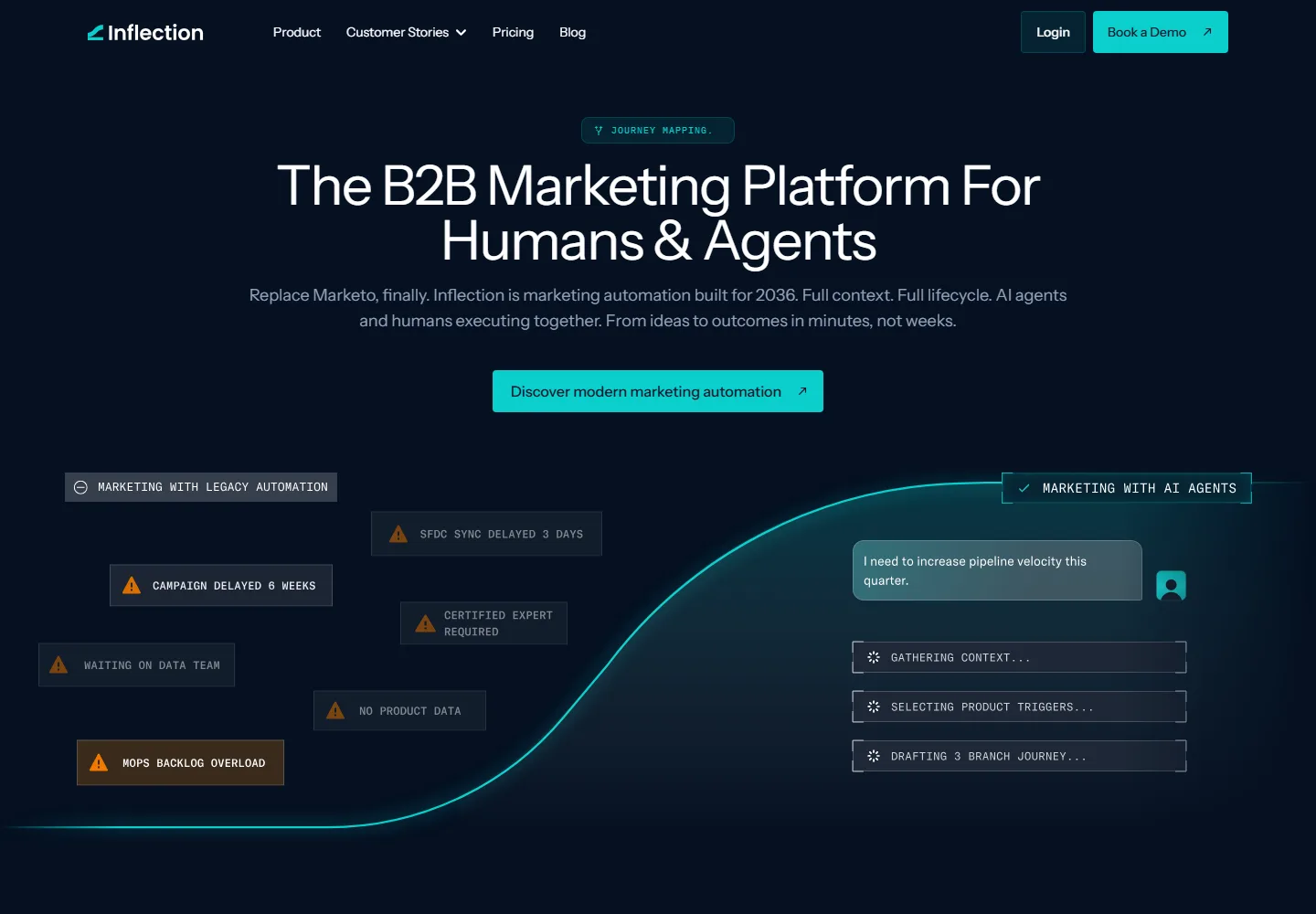
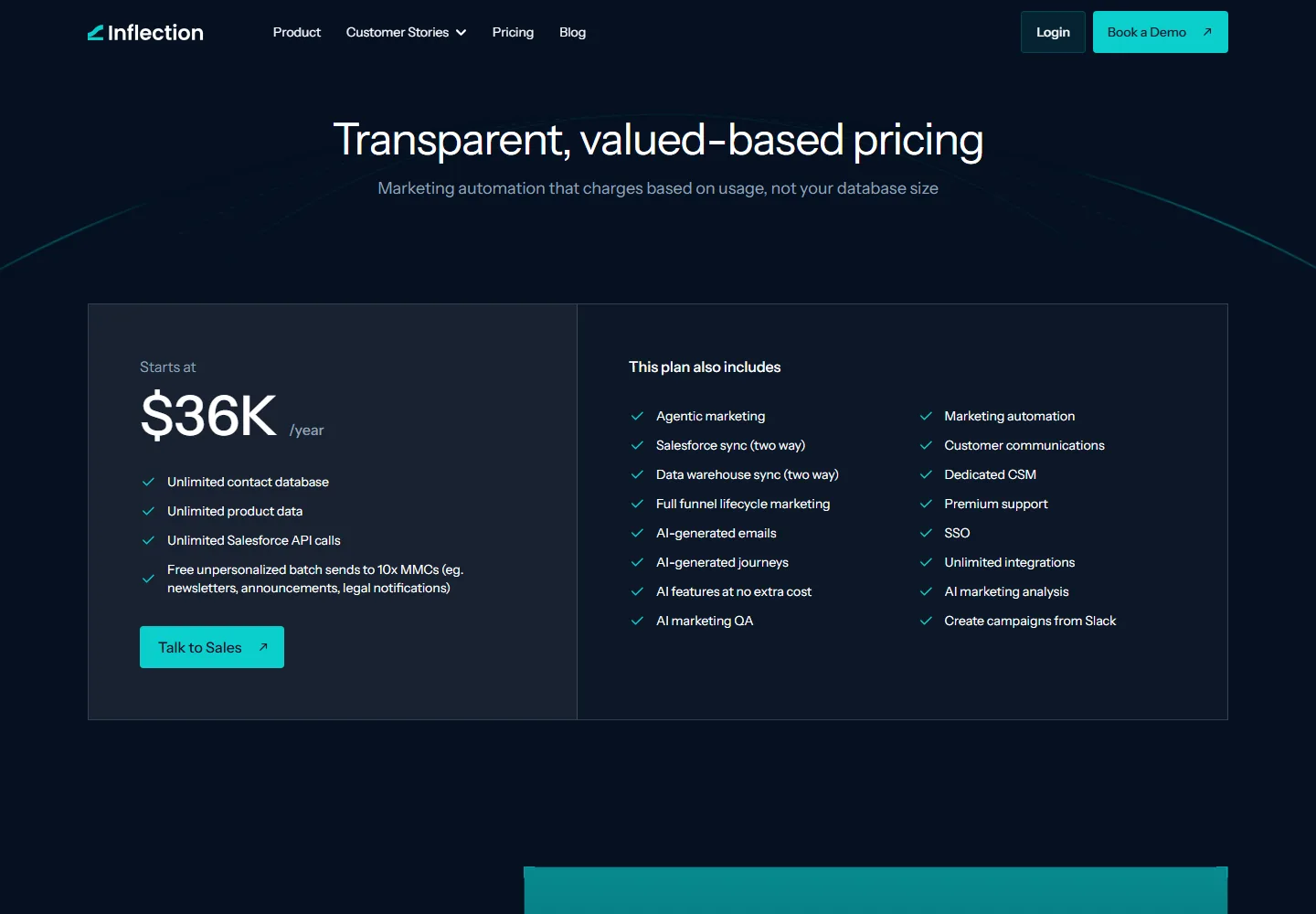
Inflection targets a specific and common frustration: B2B teams running marketing automation platforms bought a decade ago, paying enterprise prices for software that costs more in maintenance and specialist knowledge than it returns.
What it does differently
Two things stand out beyond the expected feature list.
The first is lifecycle scope. Many B2B automation platforms are acquisition tools that treat existing customers as somebody else’s system. Inflection covers prospects and customers in one place, which matters for product-led companies where the same person moves from trial to active user to expansion candidate, and where the marketing job does not stop at the deal.
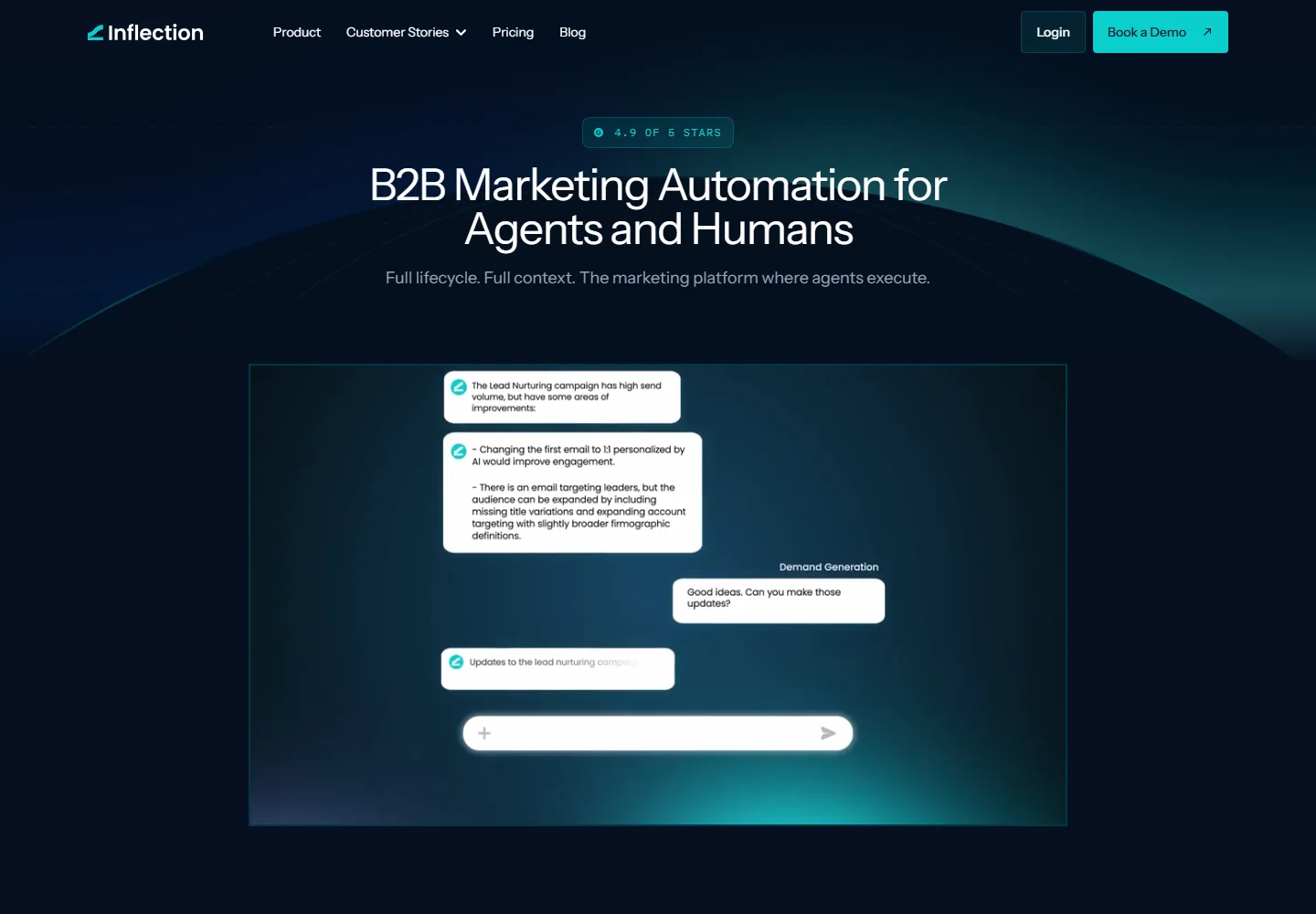
The second is access. Inflection can be reached from Slack, from Claude or ChatGPT apps, from in-product chat, or through a full MCP server. That is an architectural decision rather than a feature, and it is unusual.
Why the access model deserves thought
The upside is obvious. Asking for a segment in Slack rather than logging into a marketing platform removes real friction, and exposing an MCP server means the system can be composed into workflows that nobody has designed yet.
The corresponding question is not in the public material. Every additional surface is another place from which someone can query customer data and potentially trigger messages. In a marketing automation platform, the blast radius of a mistake is an email to your entire database.
This is manageable and it needs deciding rather than discovering. What can be done through Slack versus what requires the application. Whether an assistant can send or only draft. Who approves. What the audit trail looks like when a campaign originates in a chat window. Teams typically enable convenient access during onboarding and formalize the controls after the first incident.
The migration is the real cost
Replacing an incumbent automation platform is a project, and the hard part is rarely technical.
Programme logic built up over years is usually undocumented. The person who created it has left. Nobody is confident which of four hundred campaigns still fire, or what depends on a field somebody added in 2019. The work of establishing what the old system actually does routinely takes longer than configuring the new one.
Budget a parallel period where both run, and count that in the comparison. The licence saving is real and it is not the whole equation.
One omission worth closing early: nothing public describes CRM integration. For a B2B platform that is foundational rather than peripheral, since lead routing, opportunity data and closed-loop reporting all depend on it. Establish which objects sync, in which direction and how often, before this gets onto a shortlist.
On the references
Clay, Amplitude, DigitalOcean, Sentry and Mural is a credible list, and it is noticeably weighted toward technically sophisticated product-led companies, which fits the assistant and MCP access model. Published figures such as a 28 percent increase in product logins are uncontrolled customer accounts rather than measured lift, and should be read as evidence that these companies chose the tool rather than evidence of what it will do for you.