
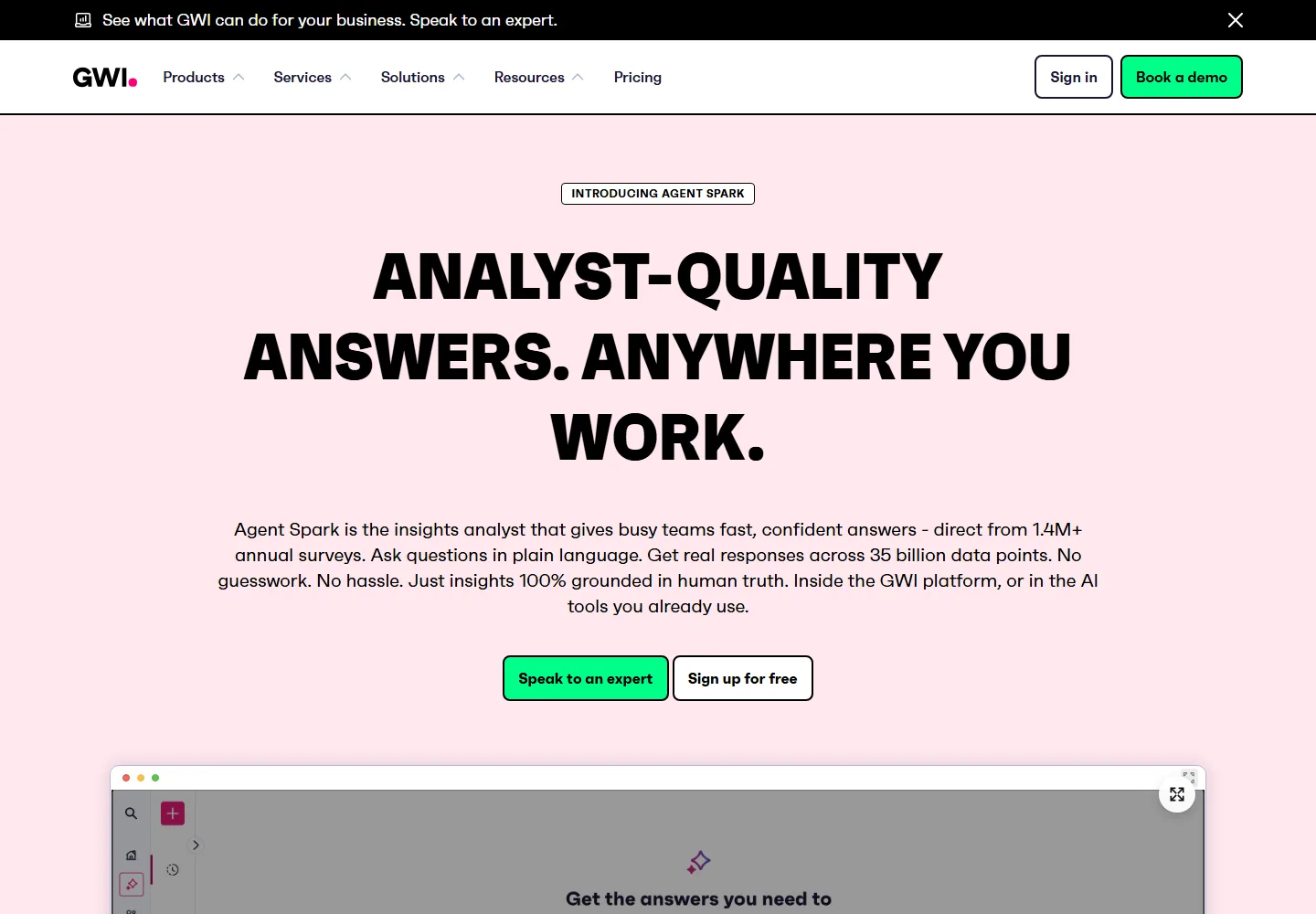
Almost every tool in this category analyses what people happened to say in public. GWI Spark sits on top of what a designed sample of people were actually asked. That is a different kind of evidence and the main reason to consider it.
Why the foundation matters
Social listening, review mining and sentiment analysis all share a structural weakness: they observe people who chose to post. That group is not the market. It skews toward the opinionated, the delighted and the furious, and it systematically under-represents the large middle who bought something, felt fine about it, and said nothing.
For measuring reaction to a campaign, that is acceptable. For understanding what a market believes, wants or intends to buy, it is the wrong instrument, and using it that way is one of the more common analytical mistakes in marketing.
GWI’s underlying asset is syndicated survey research: more than 1.4 million annual surveys across 53 markets, with 15 years of continuous fielding. Consistent instrumentation across markets and years is what makes comparison meaningful, and it is expensive and slow to build, which is why few companies have it.
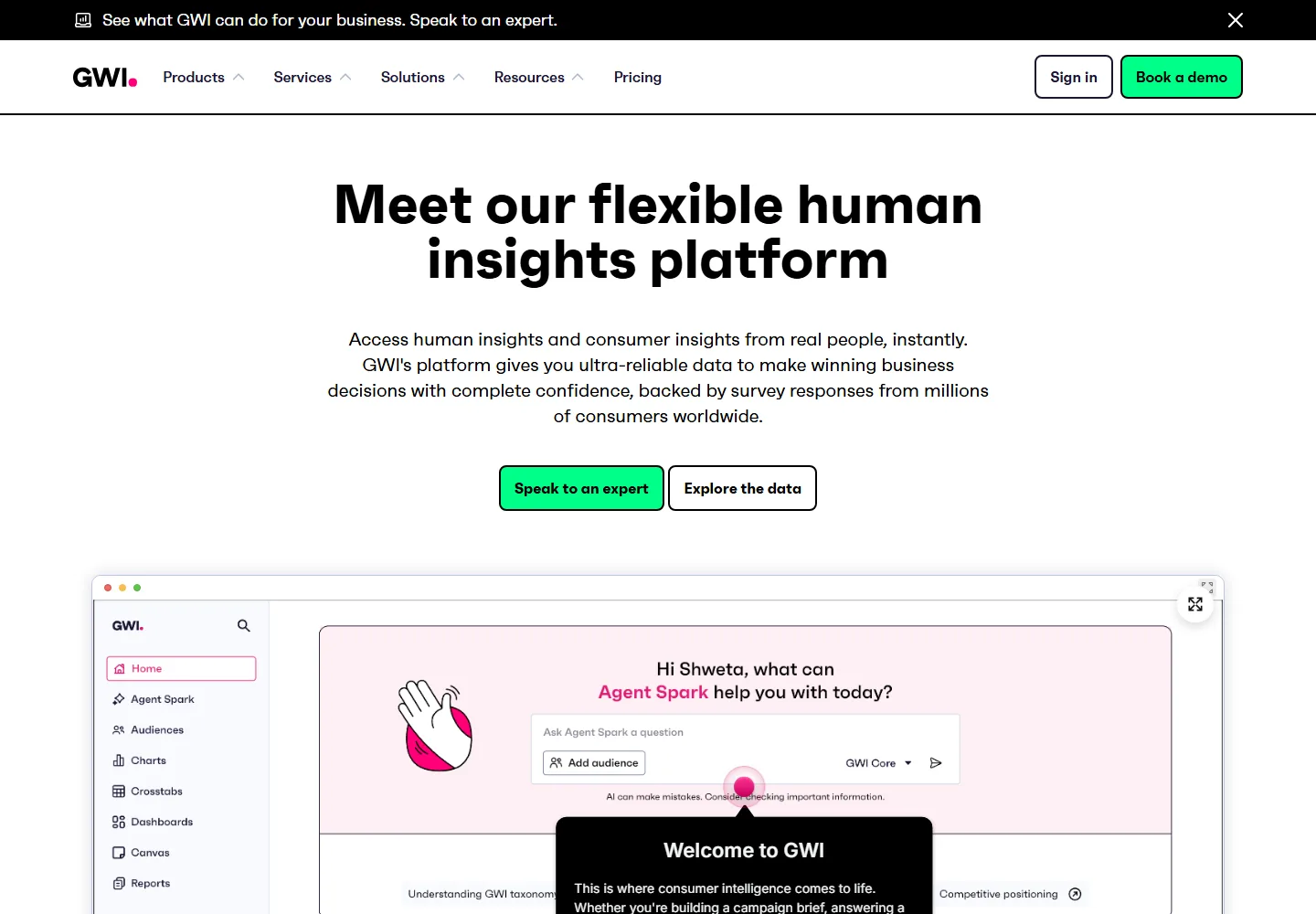
Spark is the conversational layer over that, answering plain-language questions and integrating with ChatGPT, Claude and Copilot so answers arrive where work already happens rather than in a separate portal.
The methodology gap
For survey research, sampling and weighting are not implementation details. They are the thing that determines whether a number describes reality.
None of it is published: how panellists are recruited, how responses are weighted to population, what quality controls exclude inattentive respondents. The page leads with scale, 35 billion data points and a million users a year, and scale is the least informative of the relevant facts. Polling history is full of large samples that were confidently wrong because recruitment skewed and weighting did not correct for it.
This is very likely documented somewhere for subscribers, and it should be answerable in a sales conversation. Ask, and ask what the base size is for the specific figures you intend to use, because that is where a syndicated panel’s coverage thins.
The risk the interface creates
A researcher pulling a statistic sees the base size, the question wording and the margin of error, and knows when a cell is too small to report. Someone asking a chat interface gets a fluent sentence.
That is the trade in making research conversational. It removes the friction that used to force people to look at the sample, and fluent answers project confidence that a small base does not support. Establish whether Spark surfaces base sizes alongside its answers, and adopt a rule that anything heading for a board deck gets checked rather than quoted.
What it is not
Panel data describes populations, not your customers. It is excellent for sizing a market, understanding motivations and comparing behaviour across countries. It cannot tell you why your particular buyers churned, and no amount of conversational access changes that. Pair it with your own data rather than substituting it.