
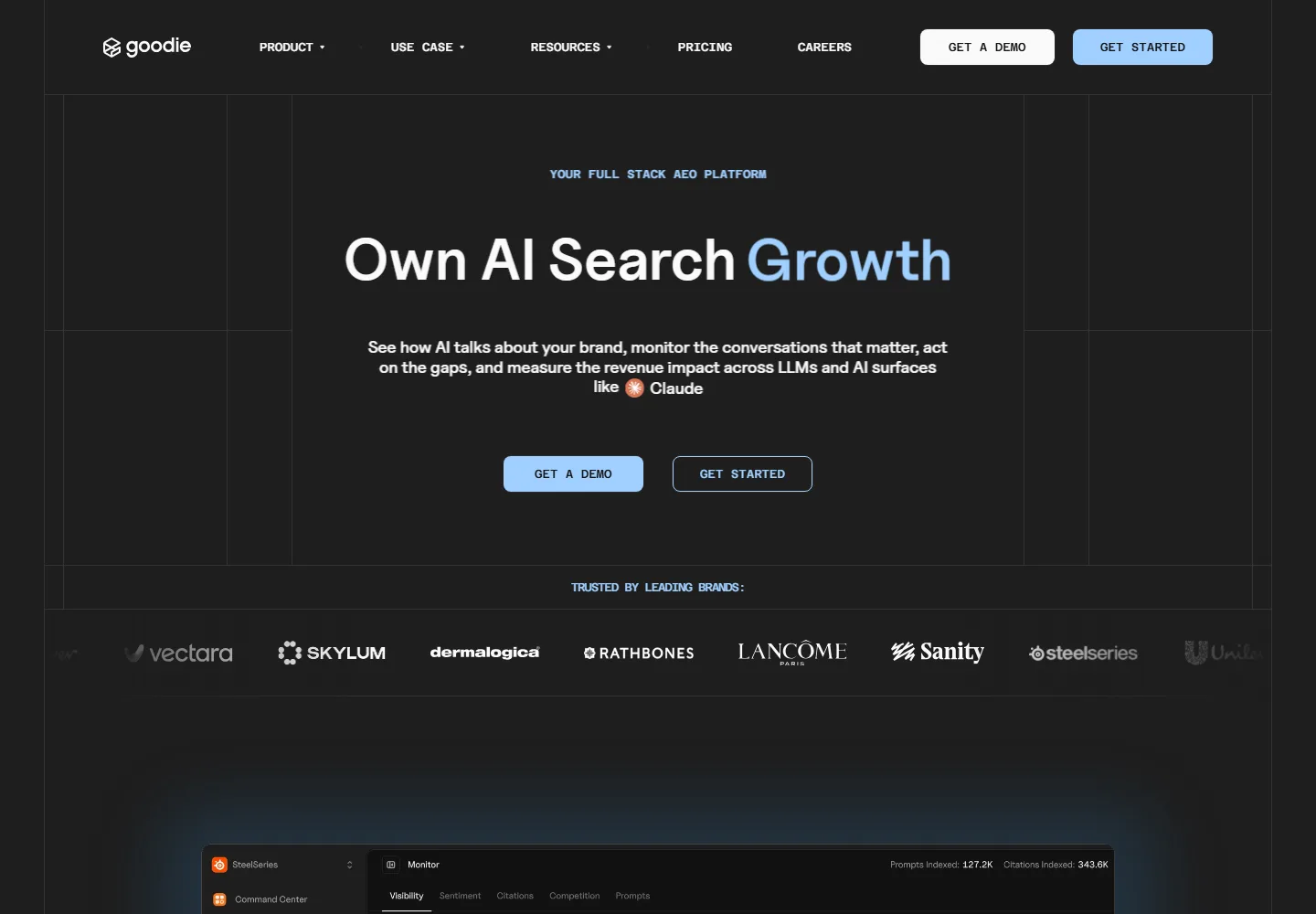
Goodie covers more of the answer engine optimization problem than anything else reviewed on this site, and the breadth is the reason to consider it and the reason to read the numbers carefully.
The scope
Eight components, but three matter more than the rest.
The Agent Experience Suite handles technical gap analysis for AI crawlers. As with every tool that addresses retrieval, this is the part of the work with a clear causal chain, because whether an engine can fetch and parse your content is deterministic and fixable rather than inferred.
The Content Studio produces optimized content rather than only recommending it. That closes the loop most GEO tools leave open, where a dashboard tells you what to write and nobody has capacity to write it.
The Agentic Commerce Suite is the genuinely novel one, addressing whether your products surface when an AI shopping agent is asked to find or buy something. Almost nothing else in this category covers that yet, and it is a reasonable hedge for transactional ecommerce even though nobody has established what actually drives placement inside those agents.
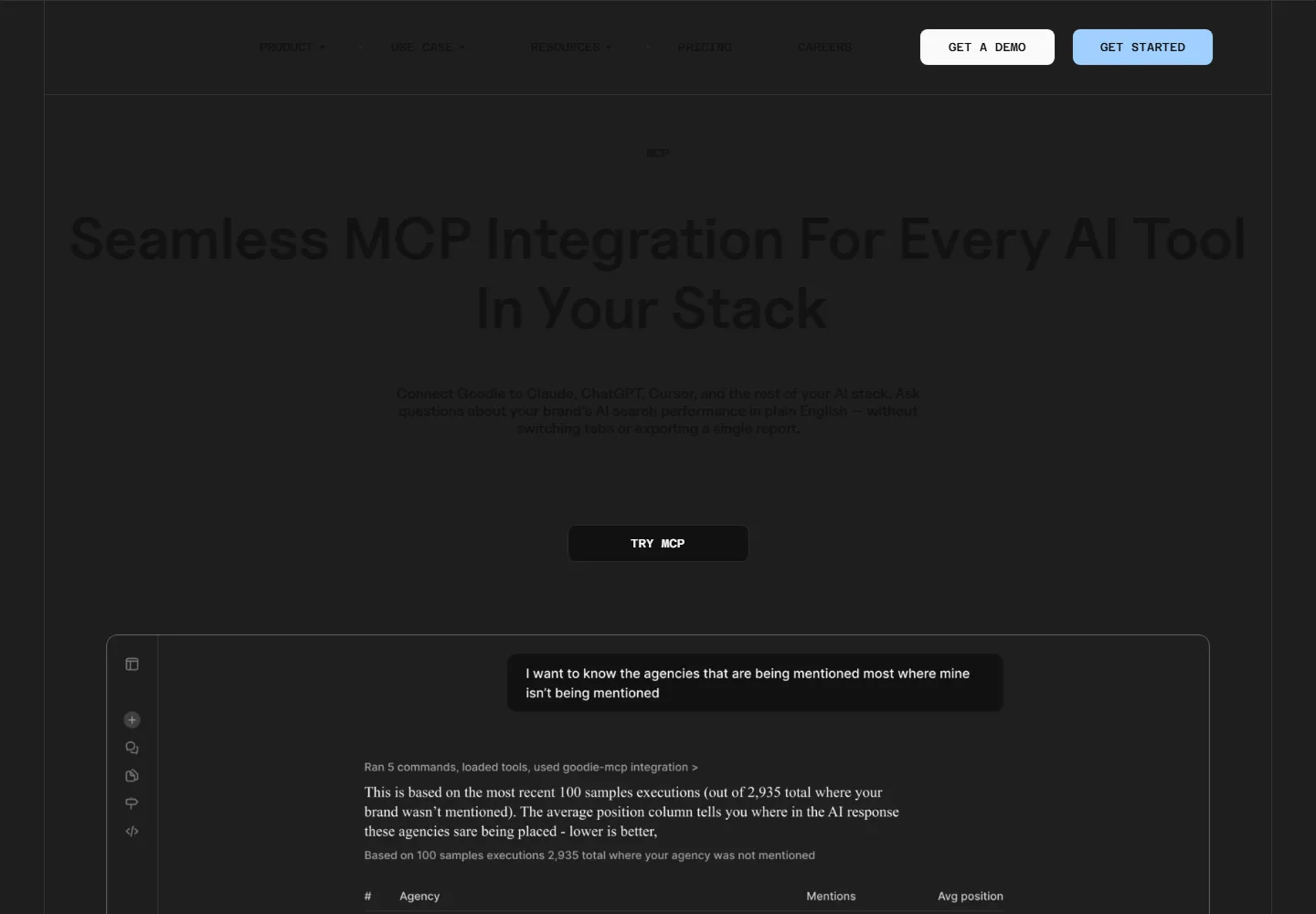
Goodie MCP means the platform’s data can reach other workflows, which is a better pattern than a dashboard someone has to remember to open.
Software or service
Goodie is described as both a tool and a service, and that changes how it should be evaluated.
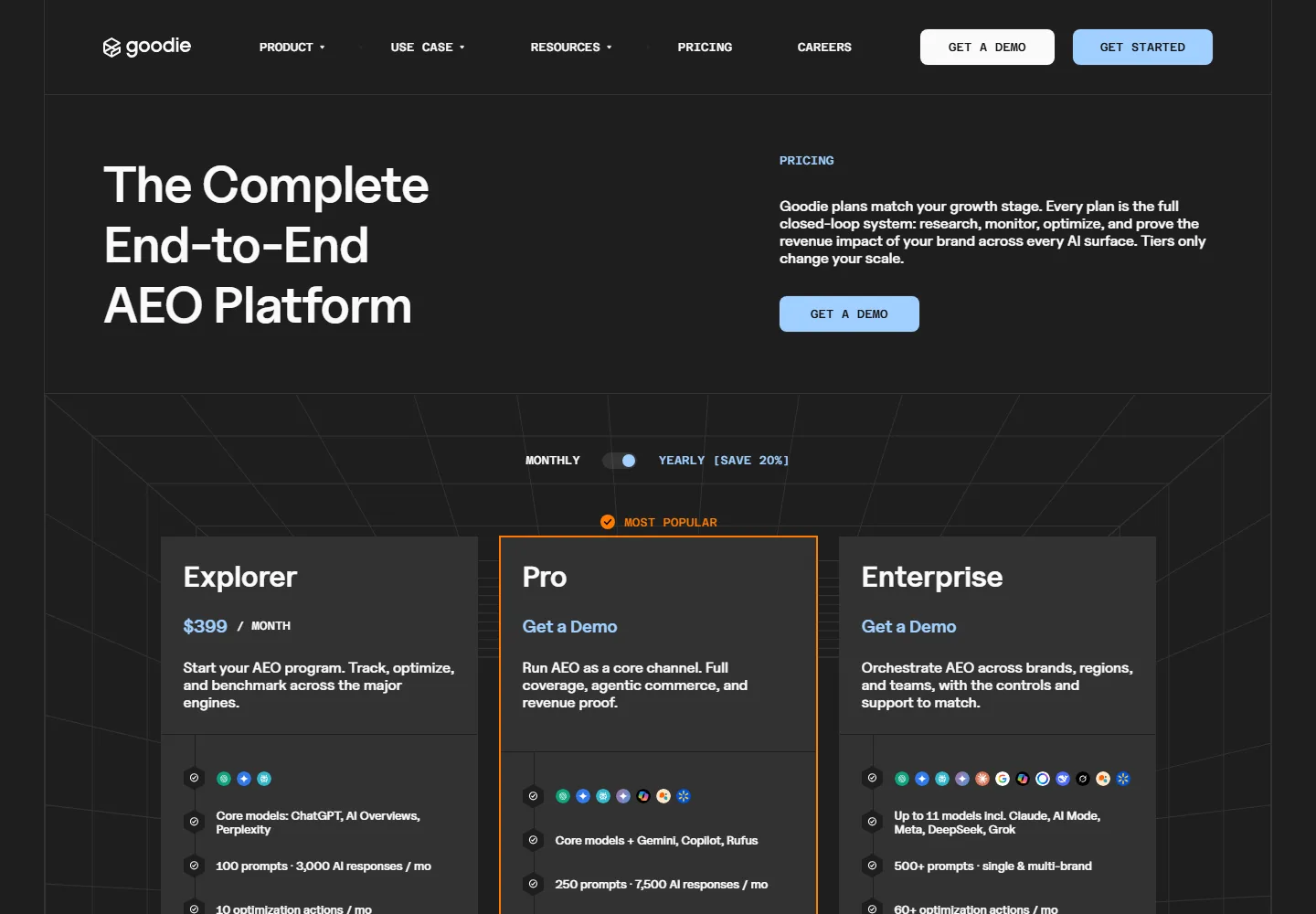
A quote that bundles licence and retained execution is not comparable to LLMrefs at 79 dollars a month, and treating them as alternatives will mislead you in whichever direction you were already leaning. Ask what the software alone costs, what the service includes, and who does the work.
If your organization has no capacity to act on GEO recommendations, the service half is the valuable part and comparing software prices is beside the point. If you have a capable in-house team, you may be paying for execution you would do better yourself.
The numbers
A 127 percent increase in AI conversions at Dermalogica. 335 percent increase in AI-sourced traffic at NoGood. 106 percent increase in citations at Rathbones. A 3.2x conversion increase at SteelSeries.
Three problems, none of which make these dishonest. There is no control group, so nothing separates the programme’s effect from everything else that changed. AI conversion attribution is itself imprecise, since identifying that a visitor arrived because of an AI answer is a hard measurement problem nobody has fully solved. And percentage increases from a low base can represent a small number of conversions, which is likely in a channel this young.
Citation counts, as at Rathbones, are the most defensible of the four, because citations are directly observable rather than attributed.
Ask what the baseline was in absolute terms and whether any comparison group existed. A vendor with four case studies can usually produce that detail for one of them.