
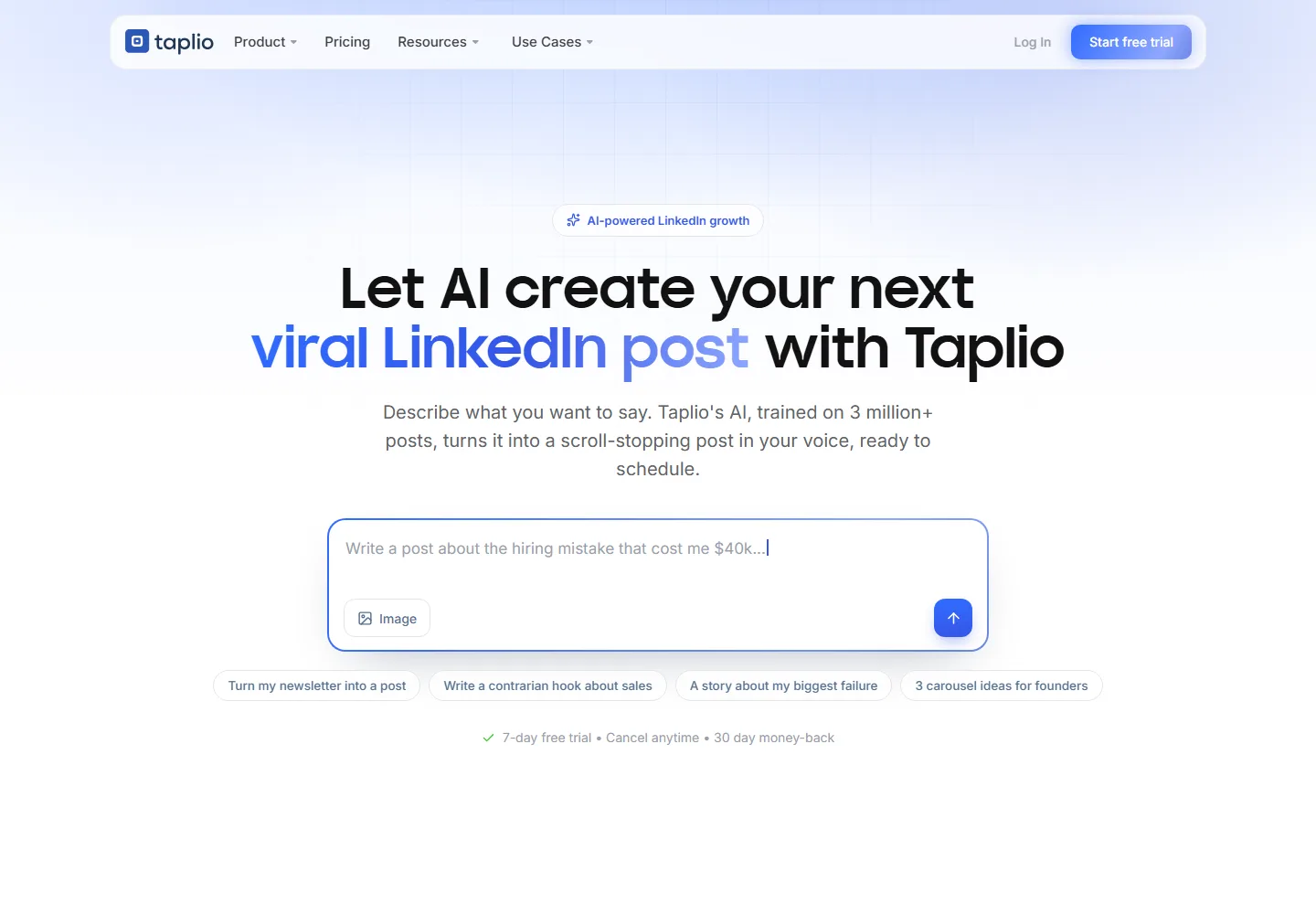
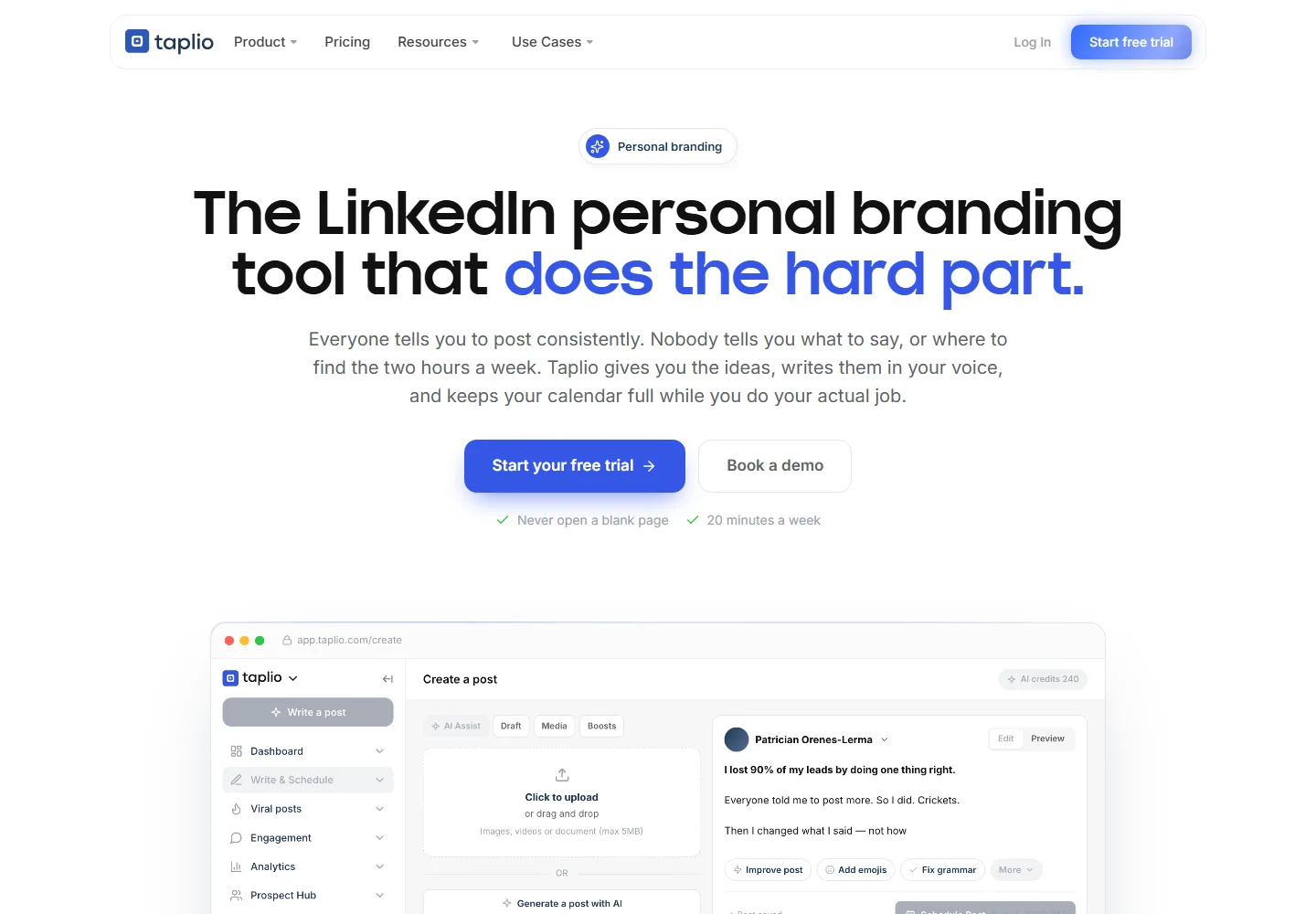
Taplio is two products sold as one, and the review comes down to whether you can buy it and use only half.
The half that is fine
LinkedIn’s native tooling for creators is poor. Scheduling is limited, analytics are thin, and there is no serious way to plan a content calendar. A tool that queues posts at sensible times and reports on performance properly fills a real gap, and Taplio does that competently.
Content inspiration and drafting assistance built around LinkedIn’s specific conventions is also more useful than a general writing tool, because what works on LinkedIn does not resemble what works elsewhere.
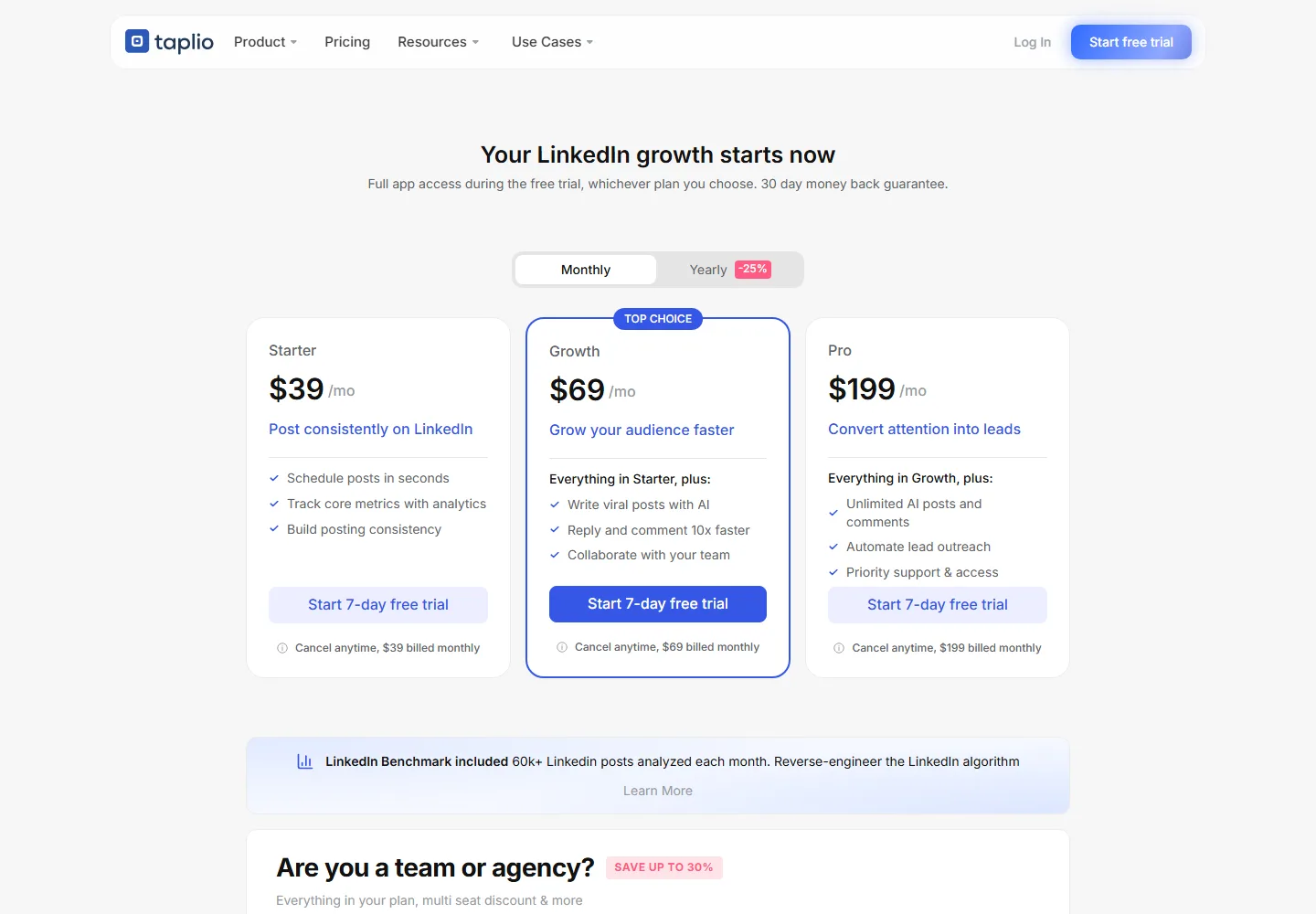
At around 39 dollars a month with a genuine seven day trial at full access, that is a defensible purchase for someone whose programme lives on LinkedIn.
The half that is not
Taplio also automates connection requests, direct messages and engagement with other people’s posts.
LinkedIn’s User Agreement prohibits using bots or other automated methods to access the service, add or download contacts, or send or redirect messages. That is not ambiguous, and it is not a technicality invented for this review.
Two things make this worth more than a passing caution.
First, enforcement is inconsistent rather than absent. People run these tools for months without incident, which is exactly what makes the risk easy to dismiss, and then an account gets restricted. The distribution of outcomes is a long stretch of nothing followed by a significant loss.
Second, the asset at risk is not the subscription. It is a LinkedIn account with a network built over years, which for a founder or a salesperson is frequently their most valuable professional asset and is not recoverable by paying someone.
The vendor carries none of that exposure. You do.
The awkward position this creates
Buying Taplio means paying for a feature set and deciding not to use part of it. That is an odd purchase, and it is the honest recommendation: use the scheduler, the analytics and the content tooling, and leave connection, messaging and engagement automation switched off.
If that seems like an unreasonable way to buy software, the alternative comparison is straightforward. FeedHive costs less and covers multiple networks without asking you to make this decision. What you give up is LinkedIn-specific depth.
This site’s social media category guidance names engagement automation as a red flag explicitly, and applying that consistently means saying so here rather than treating a popular tool as an exception. Publishing through official APIs is supported and fine. Automating human interaction is a different activity that platforms prohibit for reasons that have nothing to do with protecting their revenue.
Employers should note one further thing: deploying this on behalf of employees means putting personal accounts you do not own at risk, which is a conversation to have before rollout rather than after a restriction.