
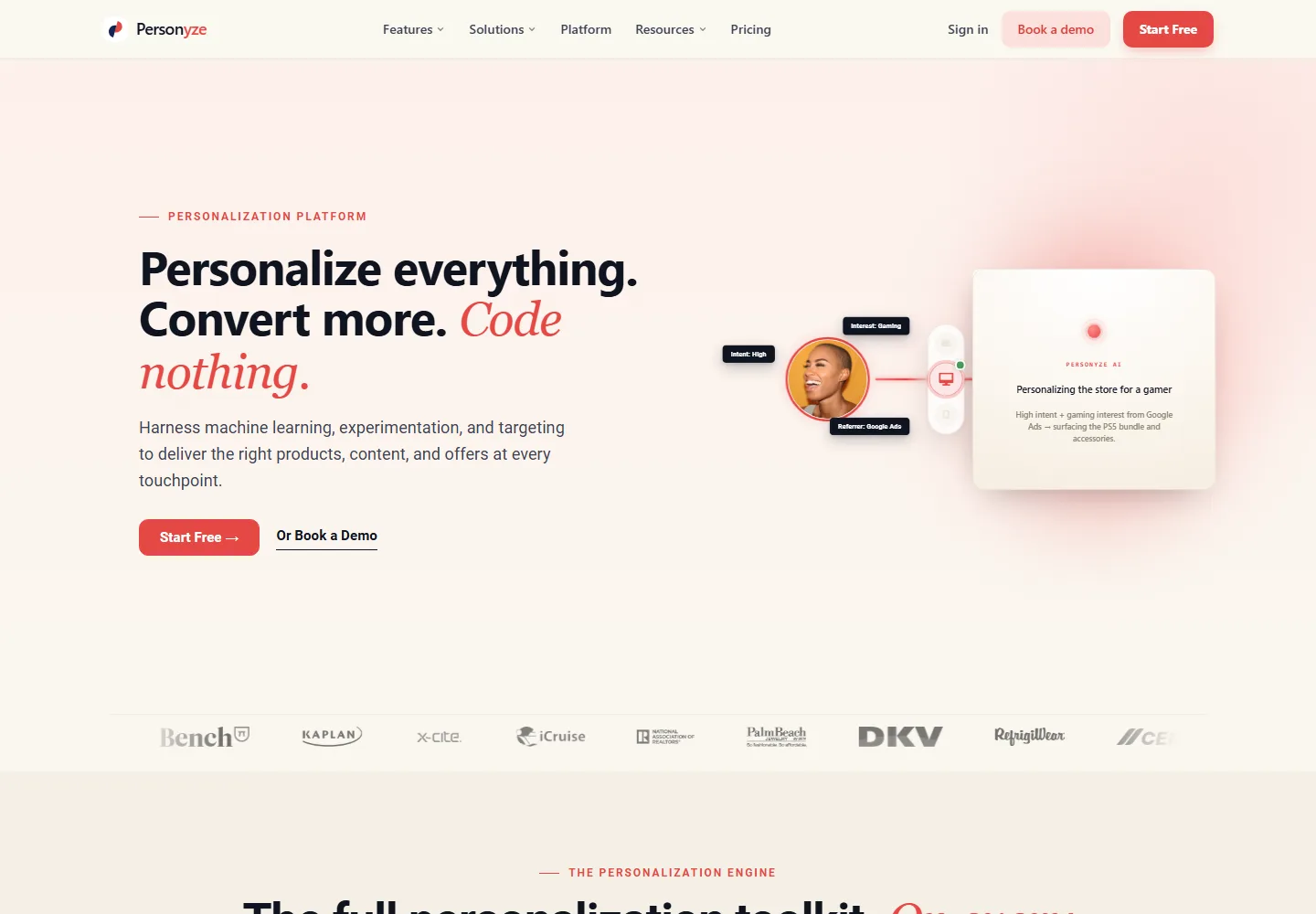
Personyze prices personalization the way software used to be priced: publicly, with the limits stated and the overages named. In a category where almost everything is quote-only, that alone makes it worth attention.
The pricing is fully legible
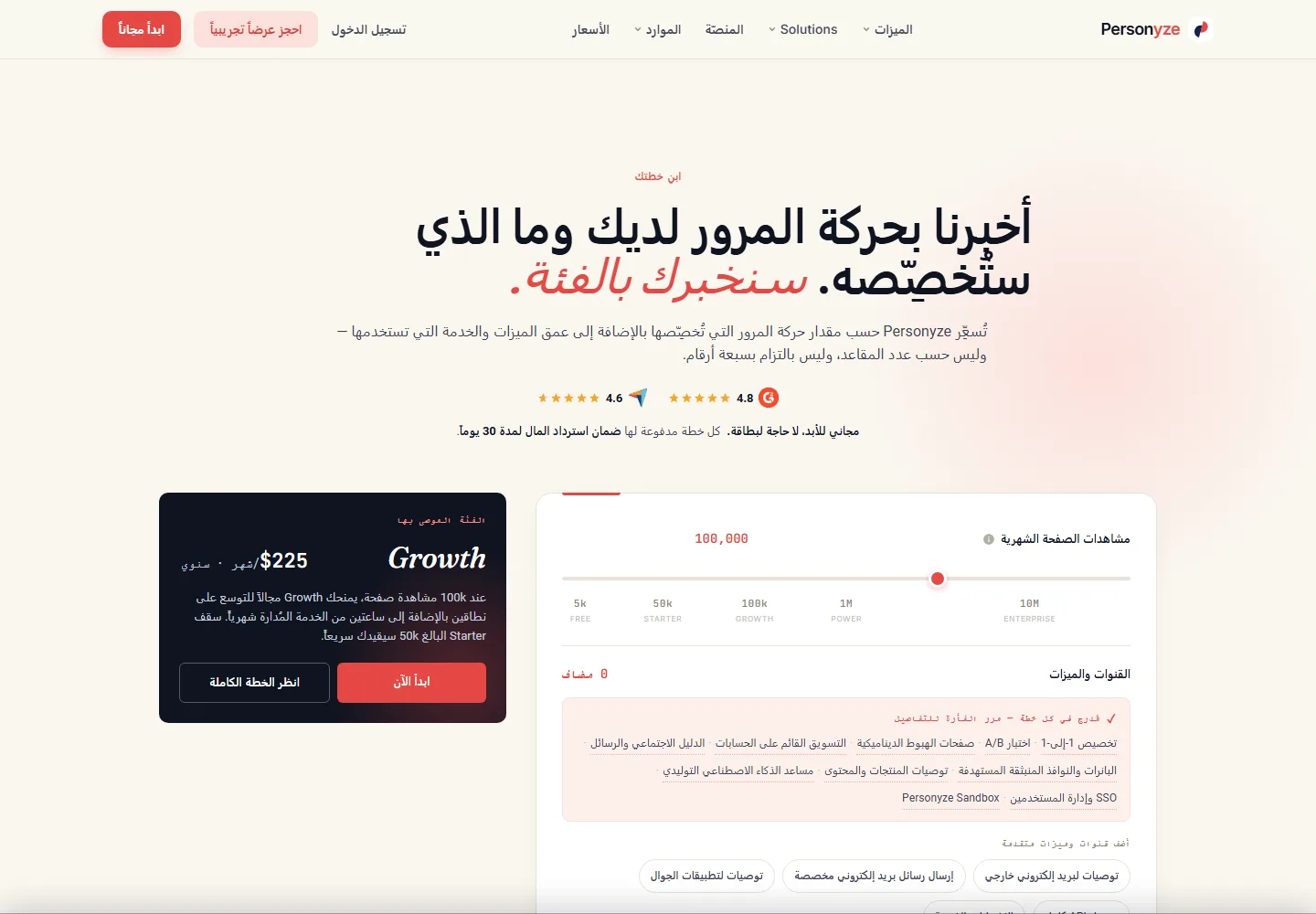
A free tier at 5,000 pageviews. Starter at 149 dollars for 50,000. Growth at 250 for 100,000. Power at 450 for a million. Enterprise from 1,450 for ten million. Overages published at 40 dollars per additional 100,000 pageviews, or 100 per million at the top of the range.
Publishing overage rates matters more than it sounds. In usage-priced software, exceeding your limit is normally the moment a renegotiation starts, from a weak position, mid-campaign. Naming the rate in advance turns that into arithmetic.
The domain limits are the constraint most likely to bite an agency: 1, 1, 2, 5 and 10 across the tiers. Pageviews scale generously and domains do not, so a multi-client agency will hit that ceiling well before the traffic one.
The service hours are the real insight
Every paid tier includes managed service hours: one, two, five and ten a month.
That is unusual and it addresses the genuine failure mode in this category. Personalization platforms rarely fail because the software cannot do the job. They fail because a team buys one, builds two campaigns during onboarding, and then the person who owned it moves on to something urgent and nothing changes for eight months. The licence renews, the value does not.
A recurring block of service hours creates an obligation on both sides. Someone from the vendor will ask what you want built this month, and that question is worth more than several features.
The corollary is that you are paying for that capacity regardless. If you have a dedicated CRO team who will never call, you are subsidising support you do not need, and a pure-software competitor may be better value.
What the free tier can and cannot tell you
Five thousand pageviews a month, one domain, three campaigns.
That is enough to answer whether the tool is pleasant to build in, which is a real question. It is nowhere near enough to answer whether personalization improves your conversion rate, because five thousand pageviews produces a handful of conversions and no comparison built on that will be meaningful.
Use the free tier for the interface, then test the actual question on a paid plan with the 30 day money-back guarantee as your safety net. That sequence gets you a real answer at recoverable cost, which is more than most of this category allows.
The gap it shares with the category
Nothing published describes the statistical method used to judge a result. Whether tests are frequentist, Bayesian or threshold-based determines what the interface means when it declares a winner.
Kameleoon and Dynamic Yield have exactly the same gap, so this is a category failing rather than a Personyze one. At this price, with a consultant attached, it is a fair thing to ask in your first service hour.