
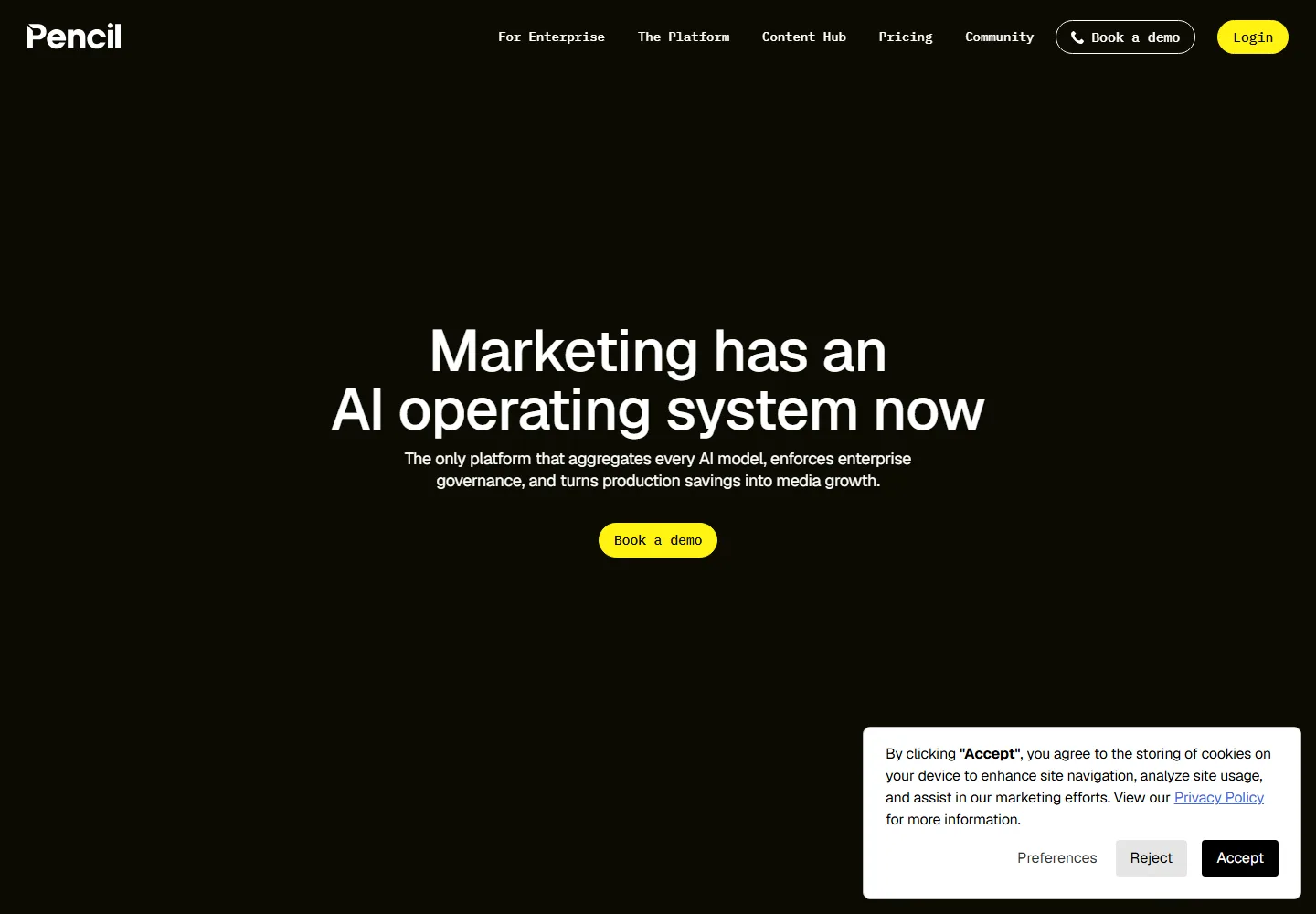
Pencil is no longer the product its earlier positioning described, and the change is an improvement. Where it once emphasized predicting ad performance, it now presents as an orchestration layer: many models, one interface, one set of brand controls.
Why aggregation is the stronger idea
Model quality moves constantly. A provider improves, another regresses, a third changes its pricing or its terms. A creative team built directly on one model inherits all of that, and switching means rebuilding workflows, retraining people and migrating assets.
An orchestration layer over OpenAI, Google, Adobe, Runway and Bria converts that dependency into a configuration choice. You keep your workflows, your brand controls and your asset library, and change what sits underneath.
For a small team this is not worth a platform fee, because the switching cost they are insuring against is low. For a brand producing tens of thousands of assets across dozens of markets, it is meaningful insurance against something they do not control.
Governance is the other half
Brand safety guardrails and role-based access controls are treated as core rather than as enterprise upsells.
That matters because in large organizations creative volume is rarely limited by generation speed. It is limited by review. When any of two hundred people across twenty-four markets can generate an asset with your logo on it, the constraint becomes who is allowed to publish what, and how you know the output stayed inside brand rules.
The reference figures are unusually operational rather than promotional: L’Oréal at 33 percent cost reduction across more than 46,000 assets, Unilever scaling to 24 markets at twice the production speed. Those describe production economics rather than conversion lift, which is both more verifiable and more honest about what the platform does.
Framing production savings as media growth is also the right argument. Money not spent making assets can move into working media, which is a cleaner case than an unprovable performance claim.
What to establish before buying
Two things.
Share of Model, described as measuring how AI perceives a brand, is asserted without published methodology. It sits adjacent to the GEO category reviewed elsewhere on this site, where the same measurement questions apply: how many samples, across which models, with what sampling method. Ask before treating it as a metric.
The rights position is the more consequential one. Commercial usage terms and indemnification differ between model providers and between plan tiers at the same provider. Putting five providers behind one interface does not merge their terms. Establish whether Pencil takes a single position covering all output regardless of which model generated it, or whether your exposure varies asset by asset. At 46,000 assets, the second is not something you can manage retrospectively.